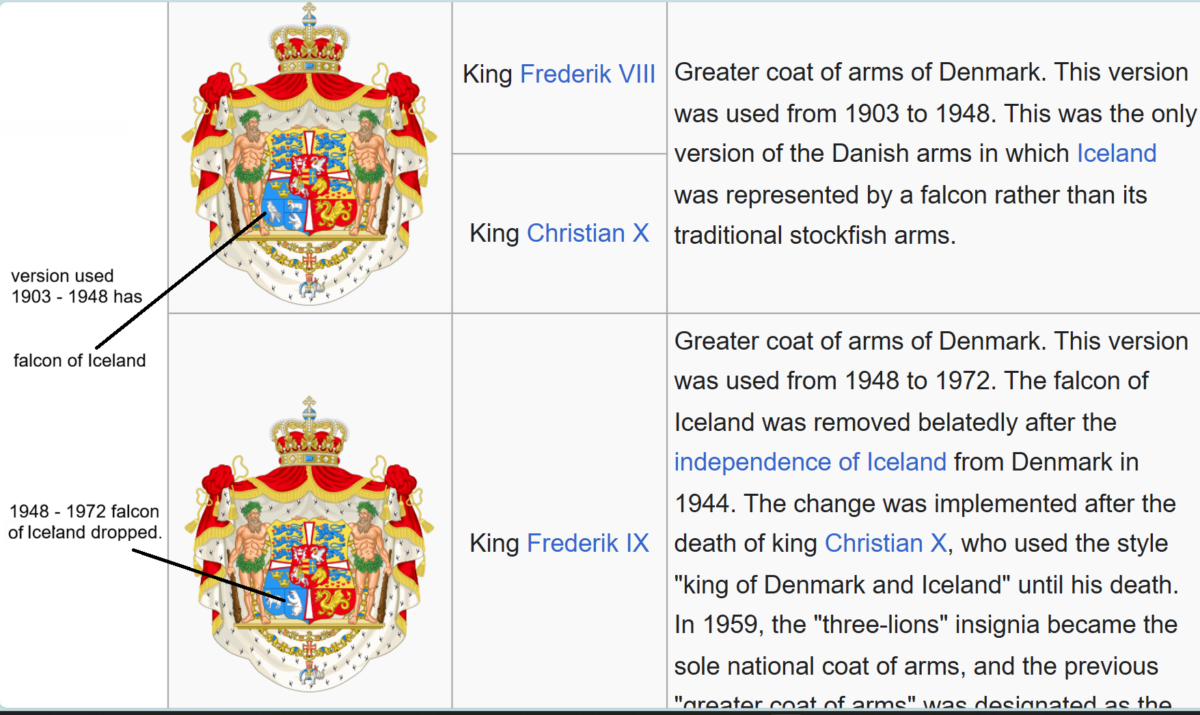
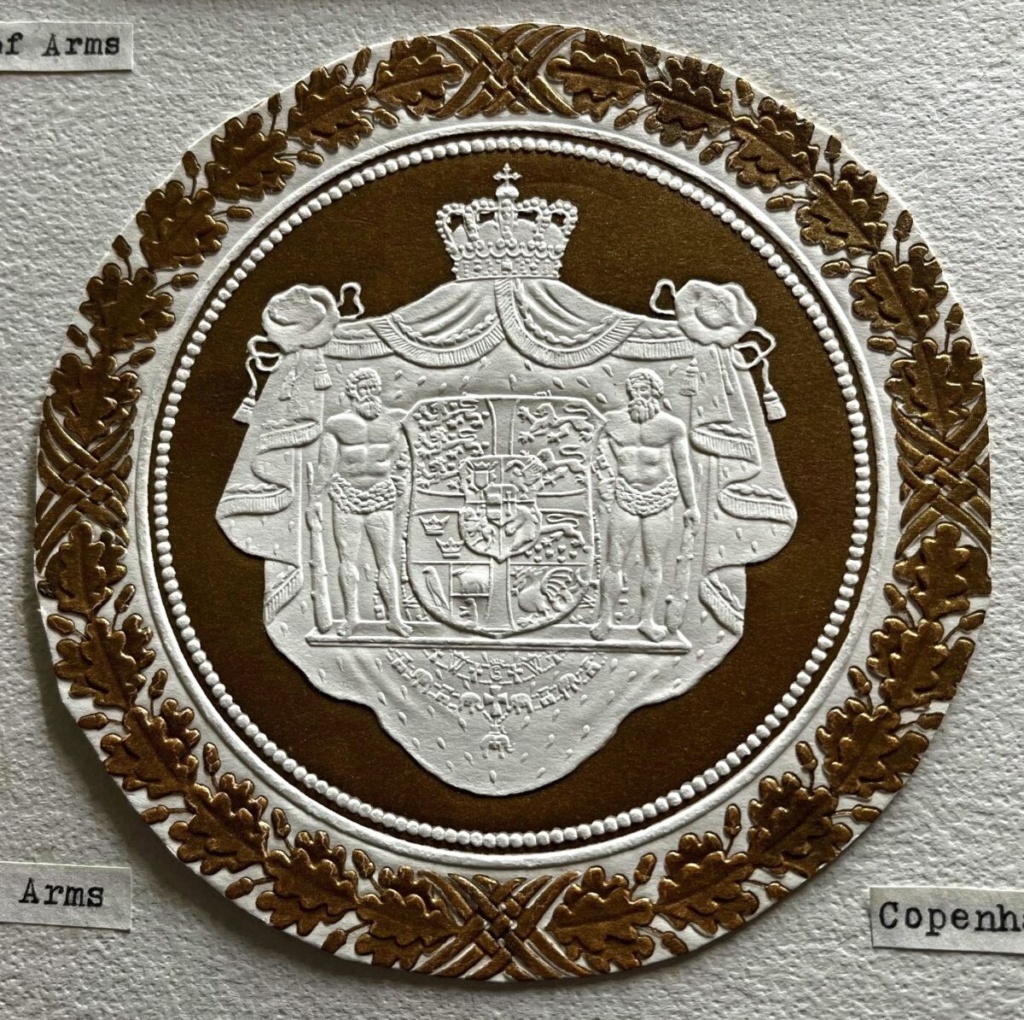
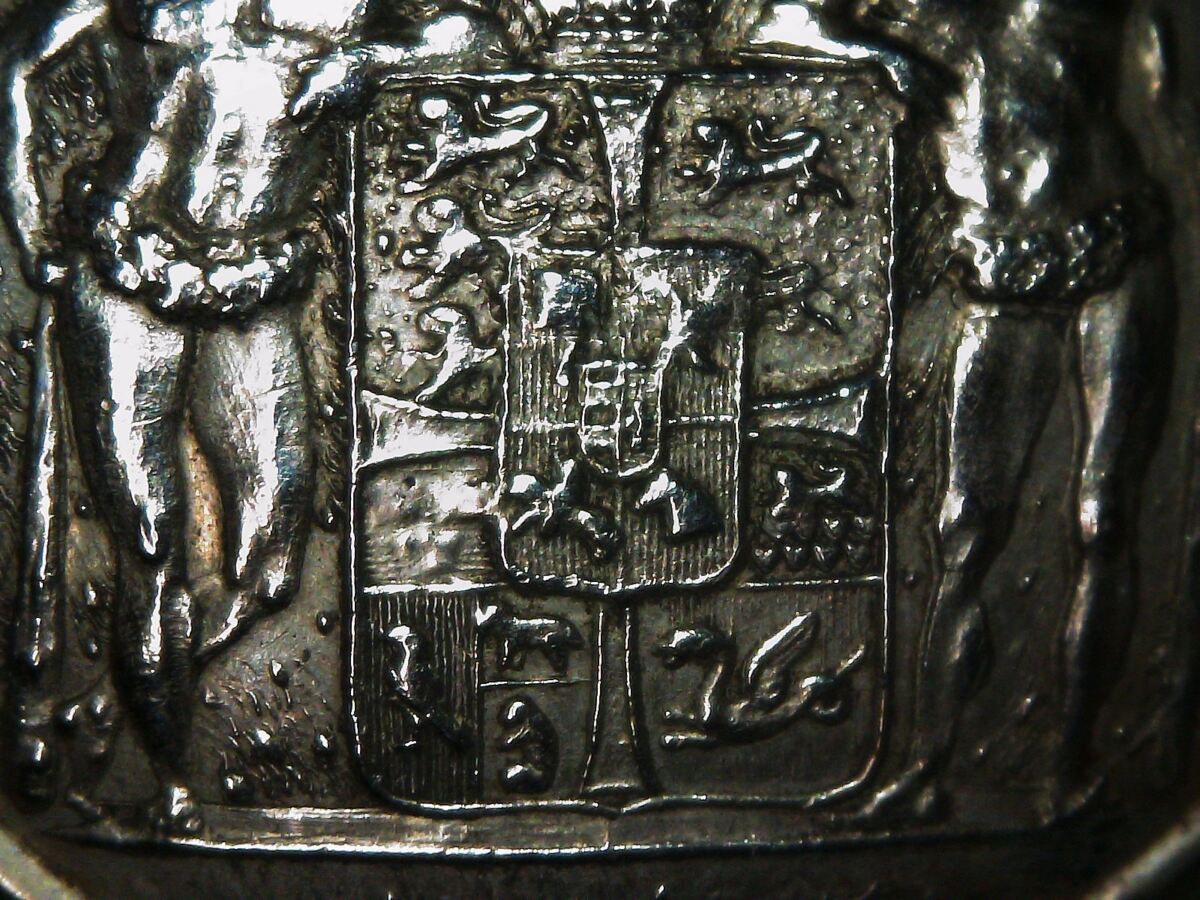
Inge Borland, the Washington State Button Society newsletter editor, points out the presence of the falcon of Iceland in our button, which dates it to between 1903 and 1948.
Back to Buttons
Background/Story
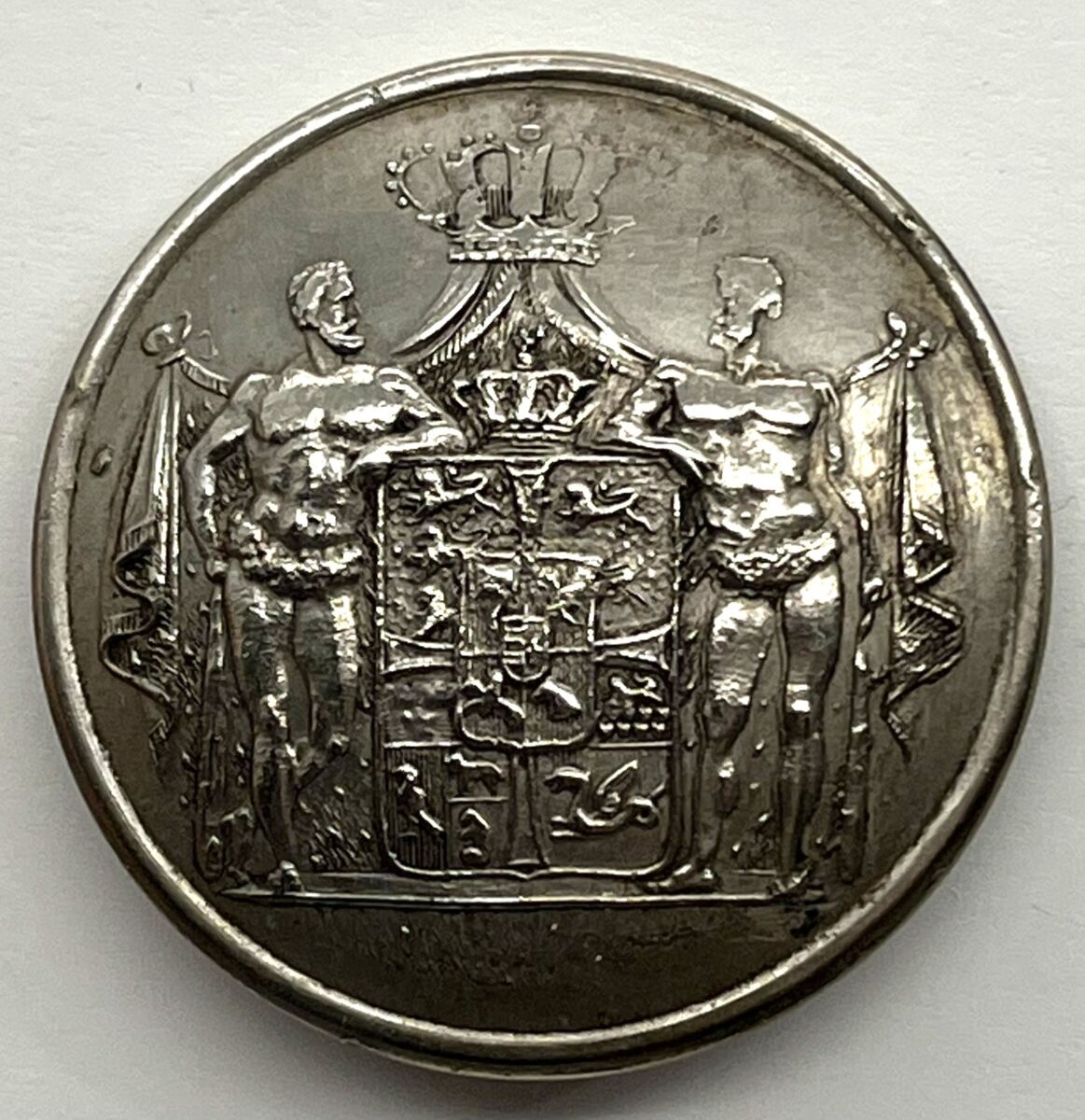
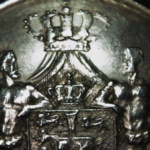
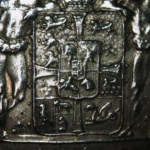
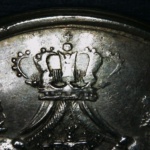
Silver-tone heraldic button, approx. 30 mm, bearing Greater (Royal) coat of arms of Denmark, used between 1903-1947.
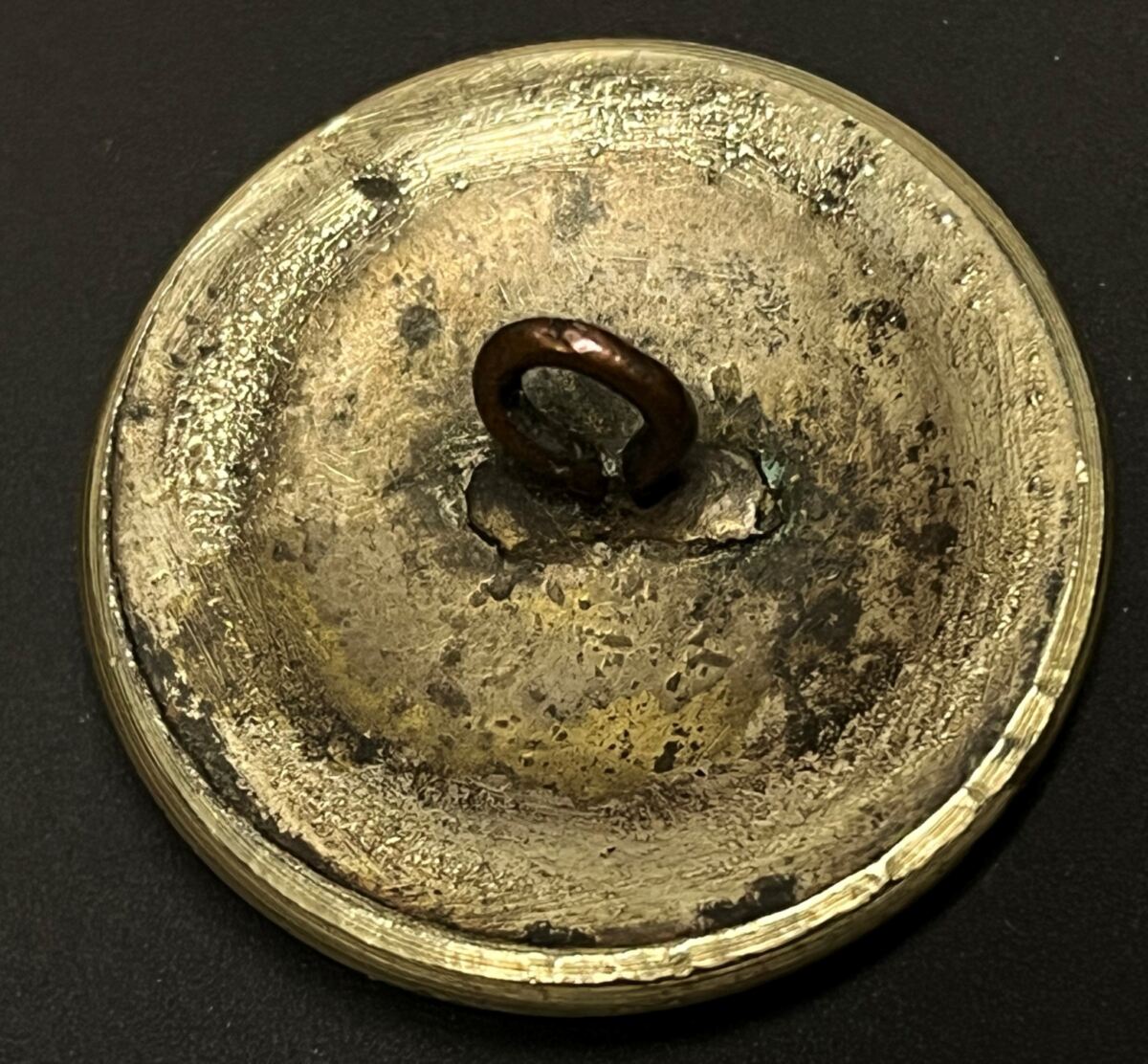
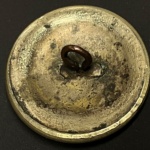
Material/finish: most likely nickel-plated brass (silver-tone plating over yellow brass) with a soldered brass wire loop shank; both button and shank are non-magnetic, and plating wear on the reverse reveals the yellow base metal.
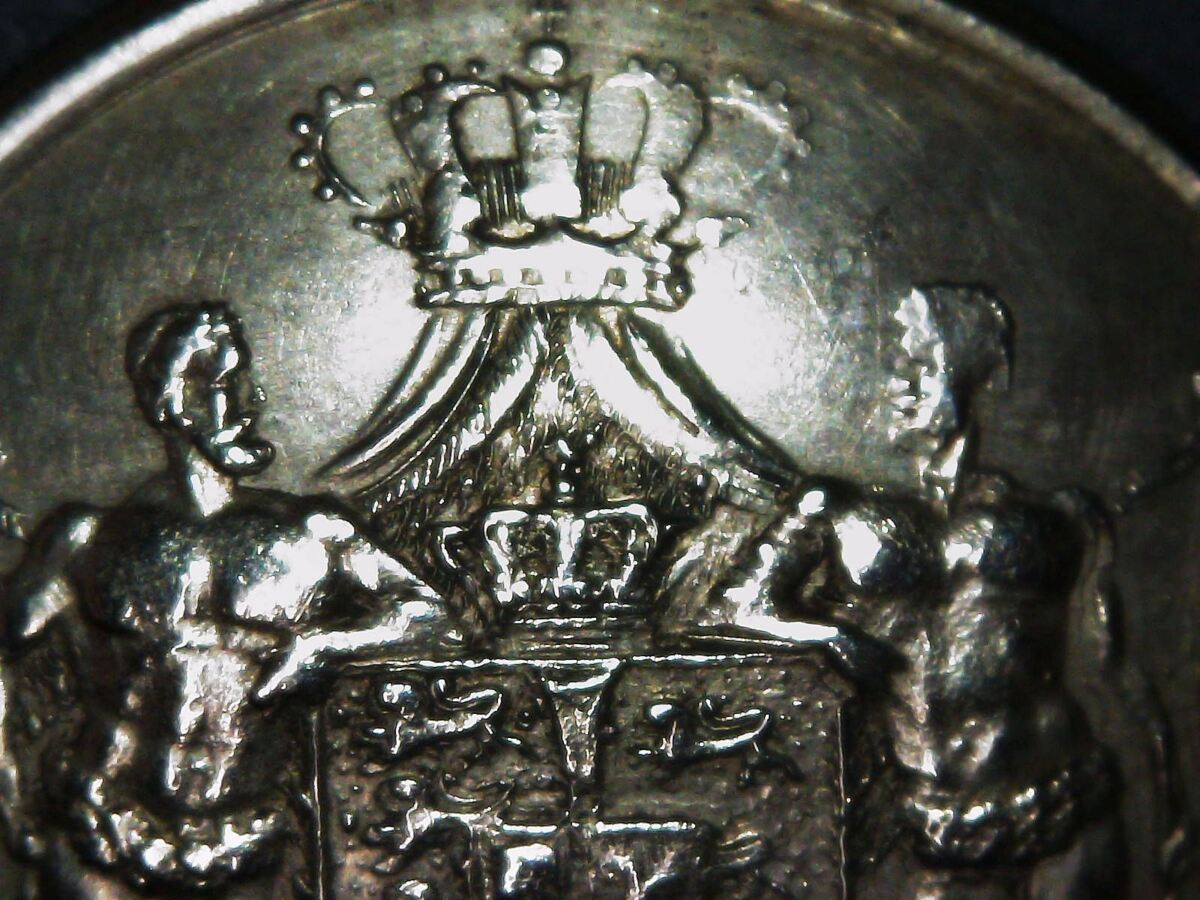
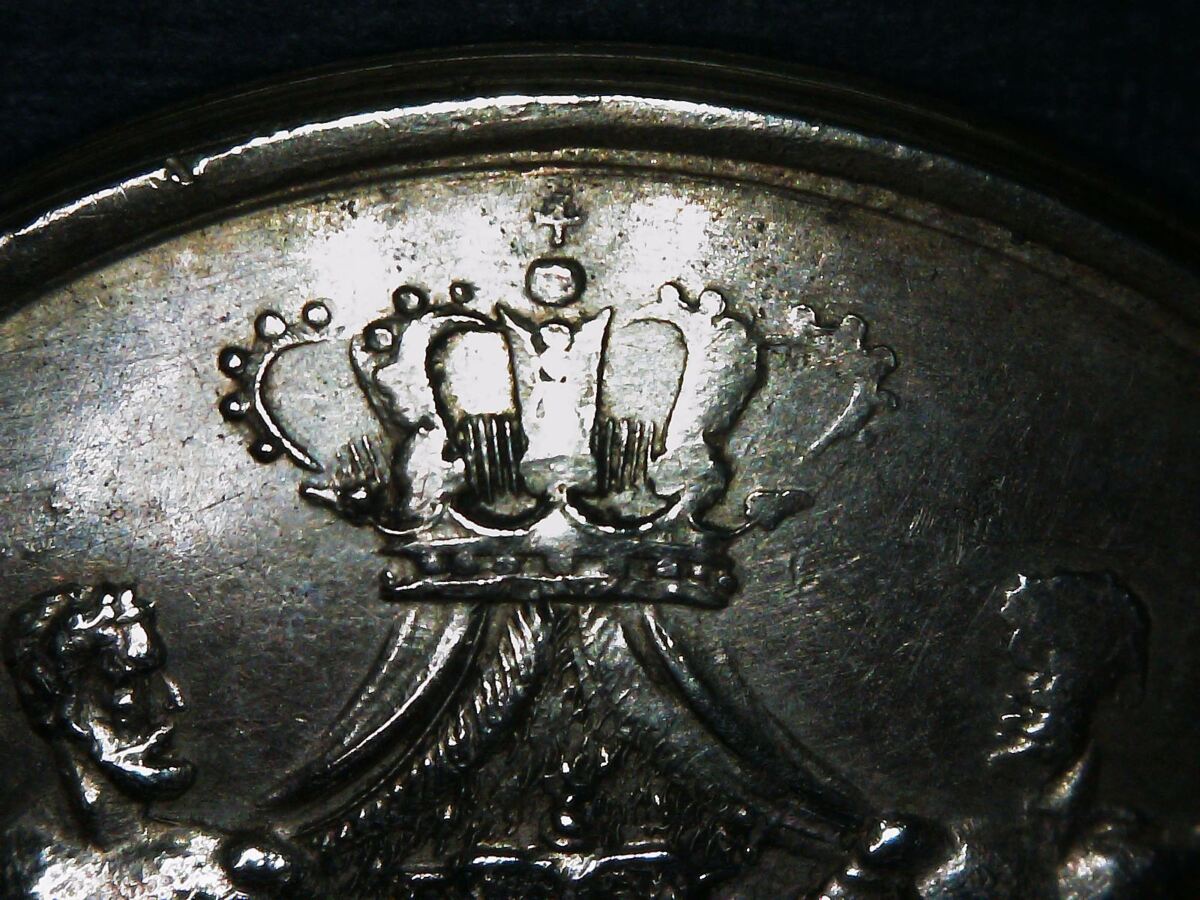
The Greater (Royal) Coat of Arms of Denmark has a complex, multi-quartered shield topped by a crown and set within a full royal display with two “wild men” supporters and a draped pavilion, crowned above with a royal crown with orb and cross.
The small center shield (inescutcheon) represents the royal house/dynastic arms, a detail typical of the more elaborate pre-1972 style used in mid-20th-century renderings. There are three shield shapes nested like Russian dolls: a big shield divided into four parts; on top of that sits a smaller shield divided into four parts; and on top of that sits a tiny shield split into two halves (with the left half showing the Oldenburg “two bars”). Altogether, there are 14 little sections of design inside the nested shields (4 + 3+ 1+ 4 + 2).