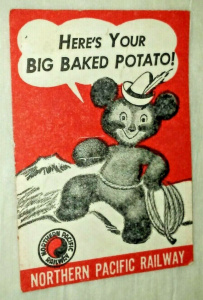
Mr. Yellowstone Cub of the The Route of the “Great Big Baked Potato” was the passenger train service, North Coast Limited (Wikipedia) by the Northern Pacific Railway. Huge potatoes grown in the fertile soil of Yakima Valley in Washington were previously considered simply too large, too tough to cook and undesirable until NP adopted them in its dining car menu in 1909.
by Mika Jarmusz
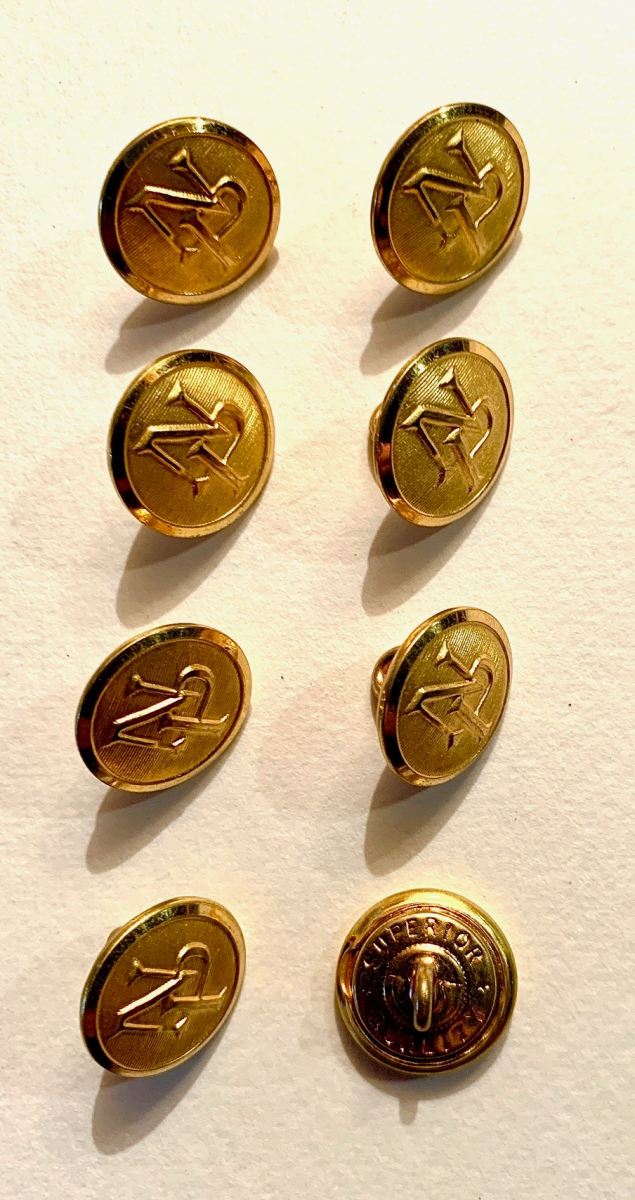
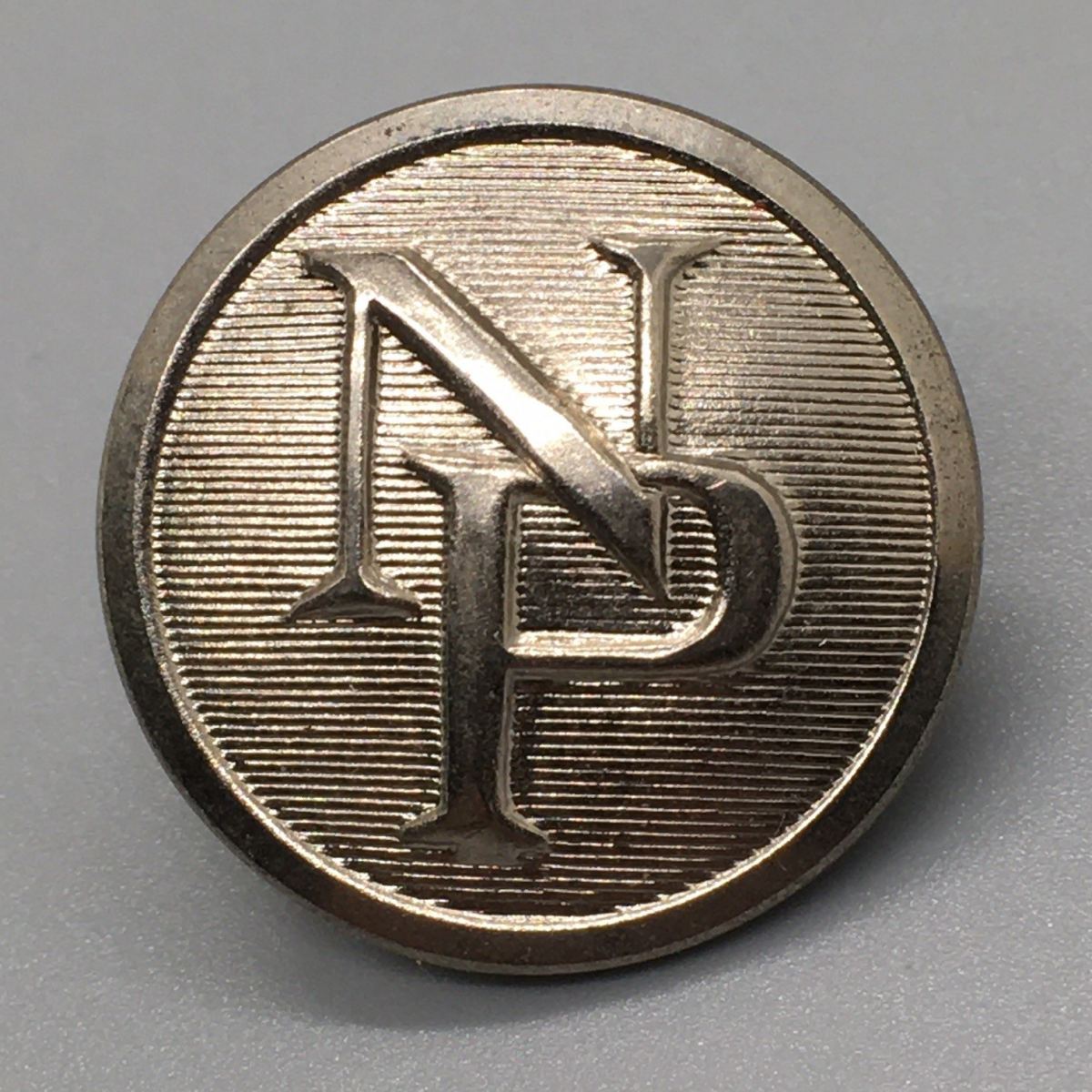
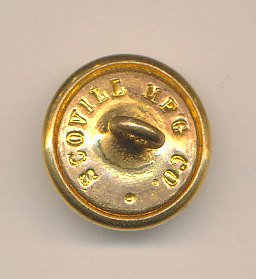
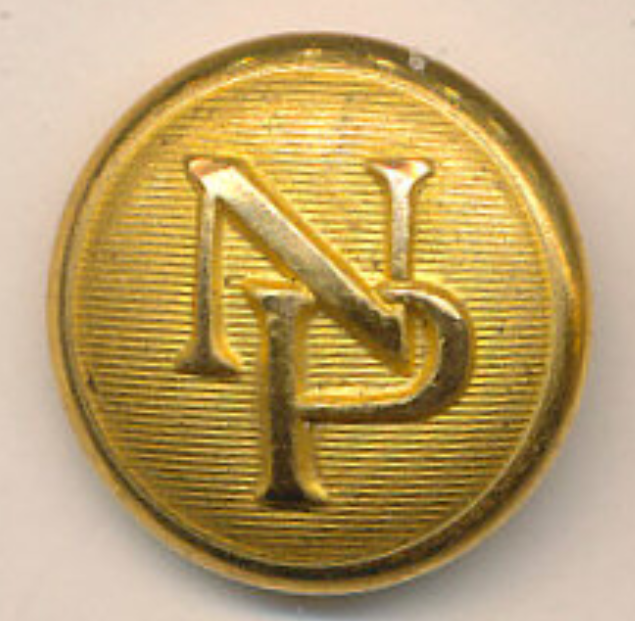
With the great big baked potato (railstograils.org) advertising with gusto to increase ridership, NP’s brand new uniform button was introduced in 1913. It is the button “12/1” in the Transportation Uniform Buttons Volume No. I Railroad by late Don VanCourt. Don notes that this button’s face design die set dates back to 1913 in the Scovill Manufacturing Company’s archive.
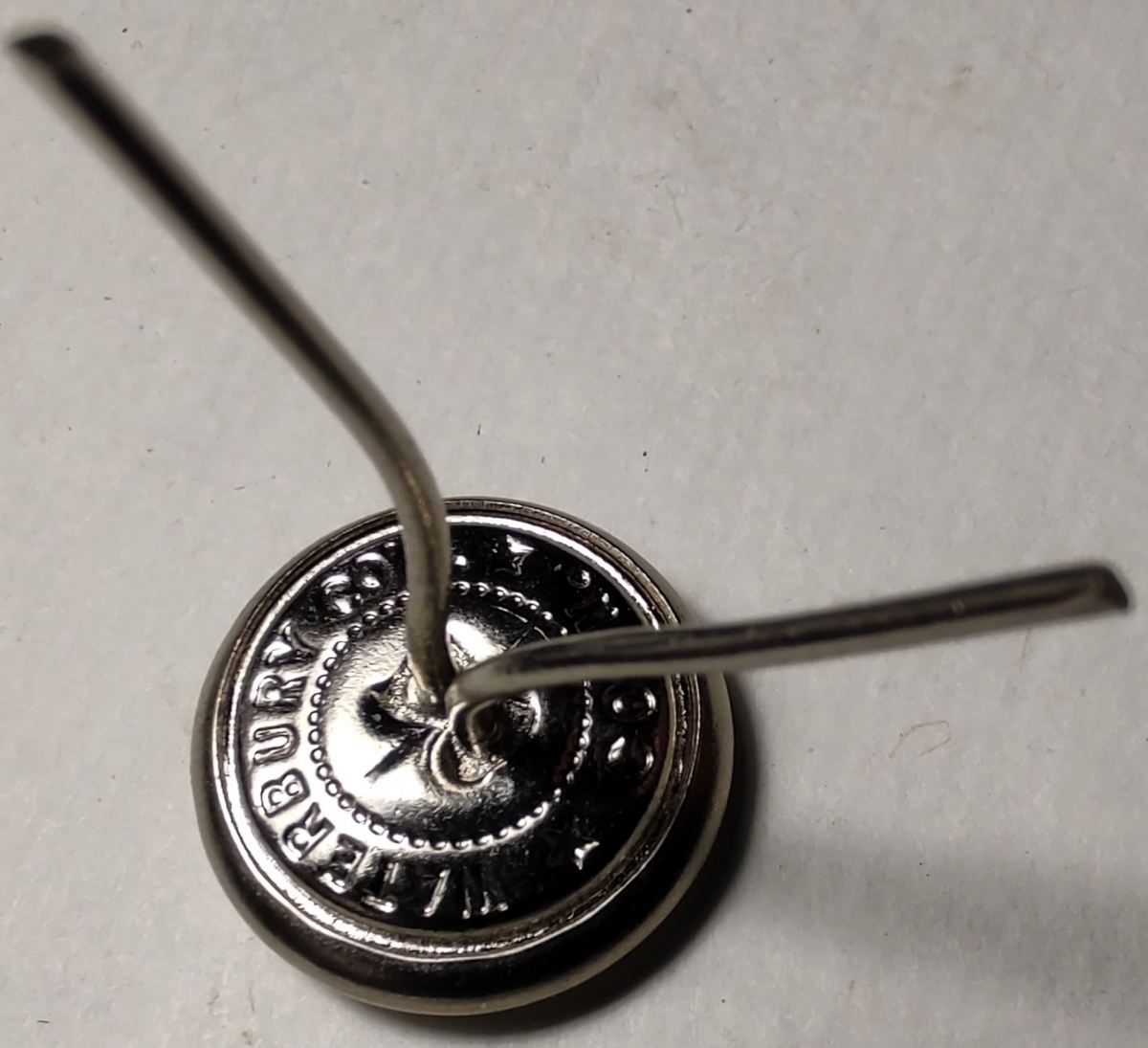
3 years later, circa 1916, NP commissioned Waterbury Button Company to make another die set of the same face design, according to Don. This NP button design was used in the ensuing years with various back marks until NP merged to become part of Burlington Northern in 1970 (Wikipedia).
This blotter was one of many Big Baked Potato ad souvenir items. Photo: MJ
[caption id="attachment_16049" align="aligncenter" width="795"] 1915 menu photo: Worthpoint.com
photo: Worthpoint.com
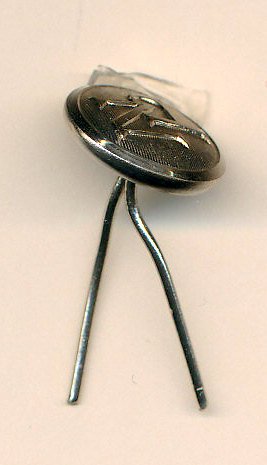
Scovill back mark, 15mm. Photo: Jhonson FrazierFront of the button. Photo: Jhonson Frazier
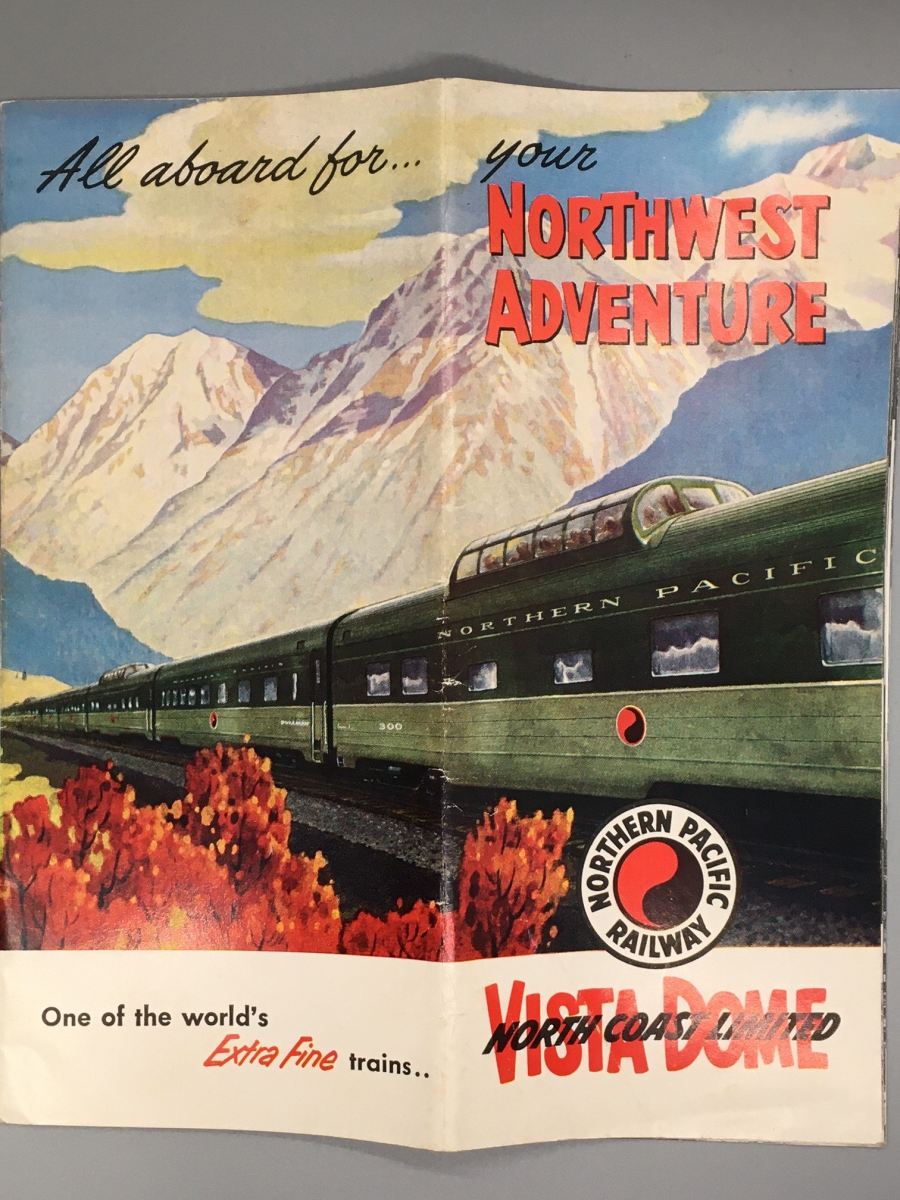
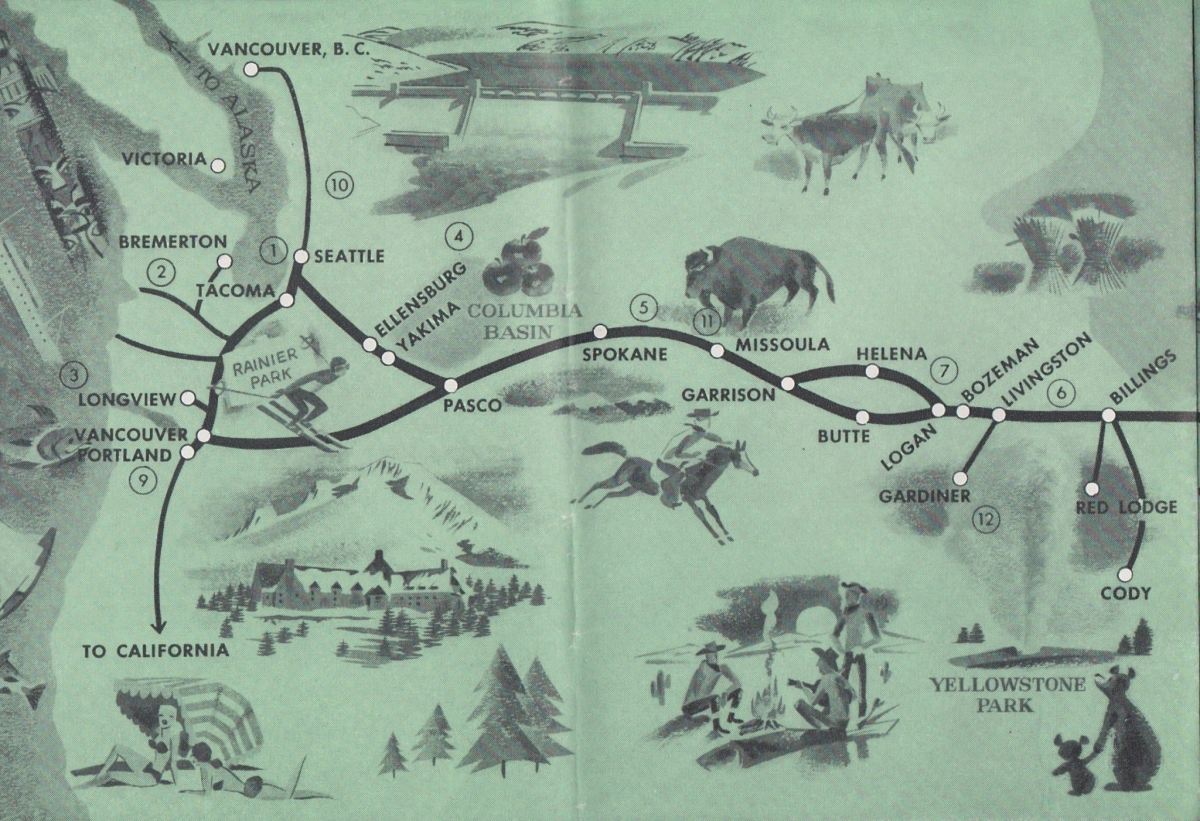
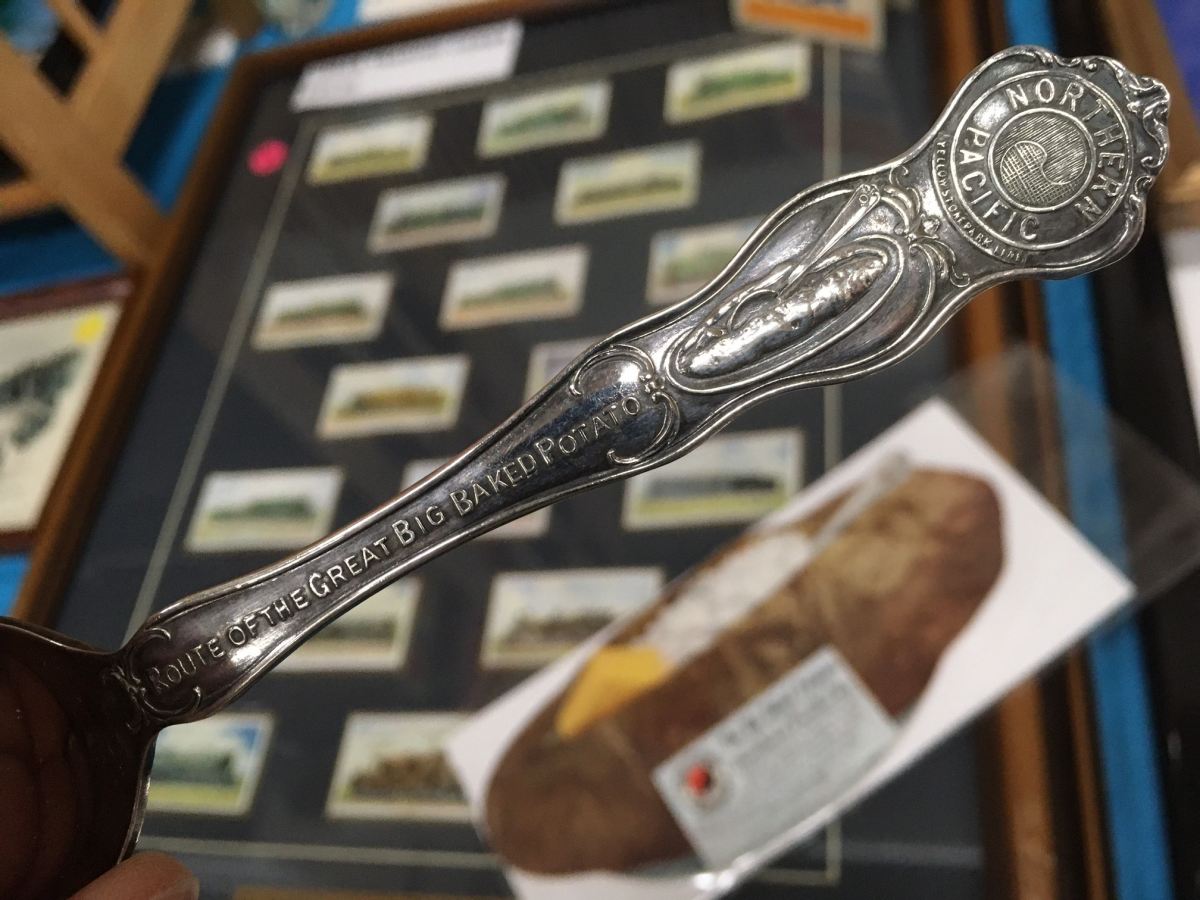
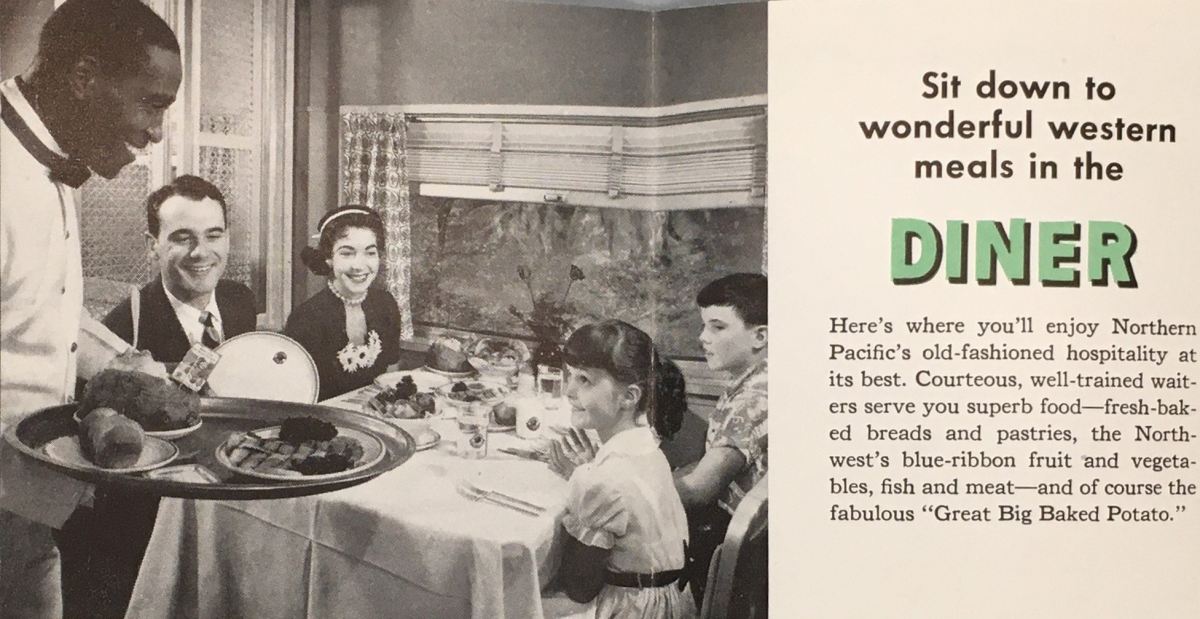
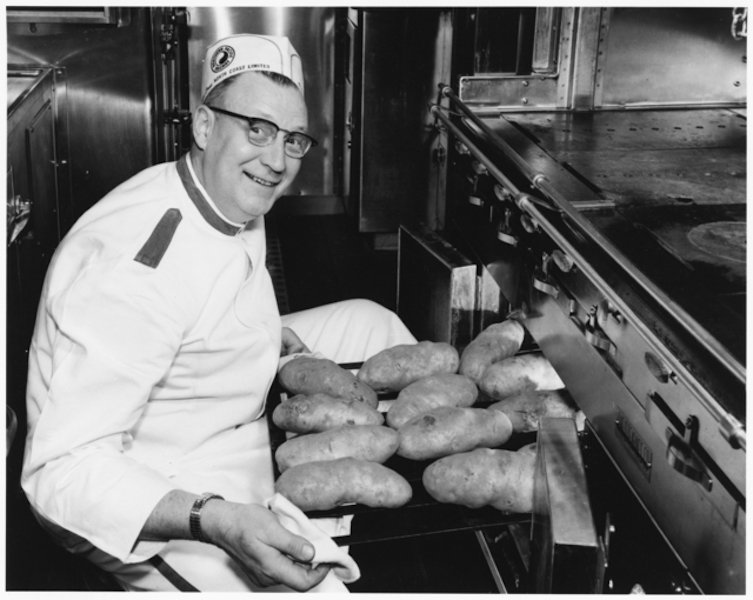
Cover of the North Coast Limited brochure ’56. Photo: MJNorth Coast Limited promoted the Yellow Stone National Park. (from the ’56 brochure.)Do you see the little SPOON on the spoon handle, scooping into a potato? Photo: MJFrom the North Coast Limited ’56 brochureBig potatoes going into the Northern Pacific kitchen car oven. Photo: Minnesota Historical Society
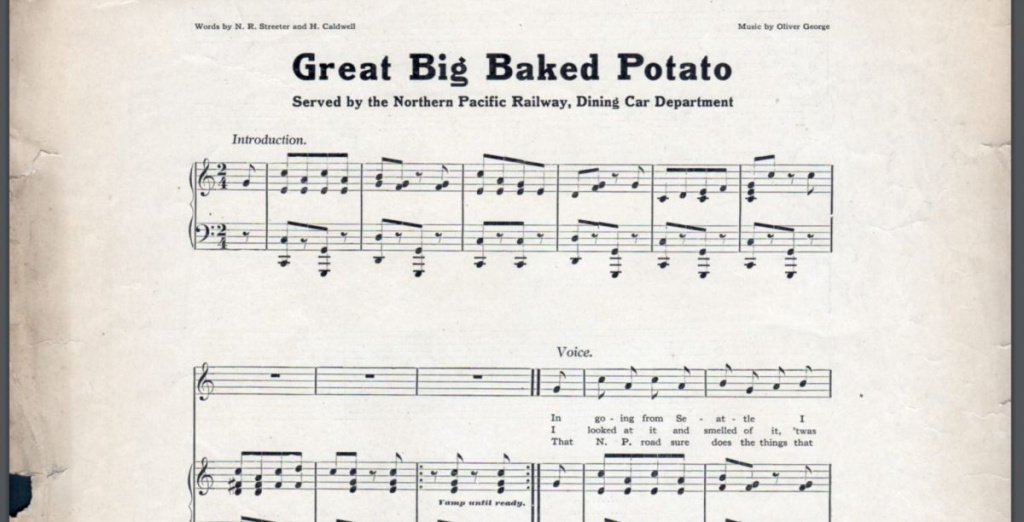
Here’s a jingle from the Northern Pacific Railway.
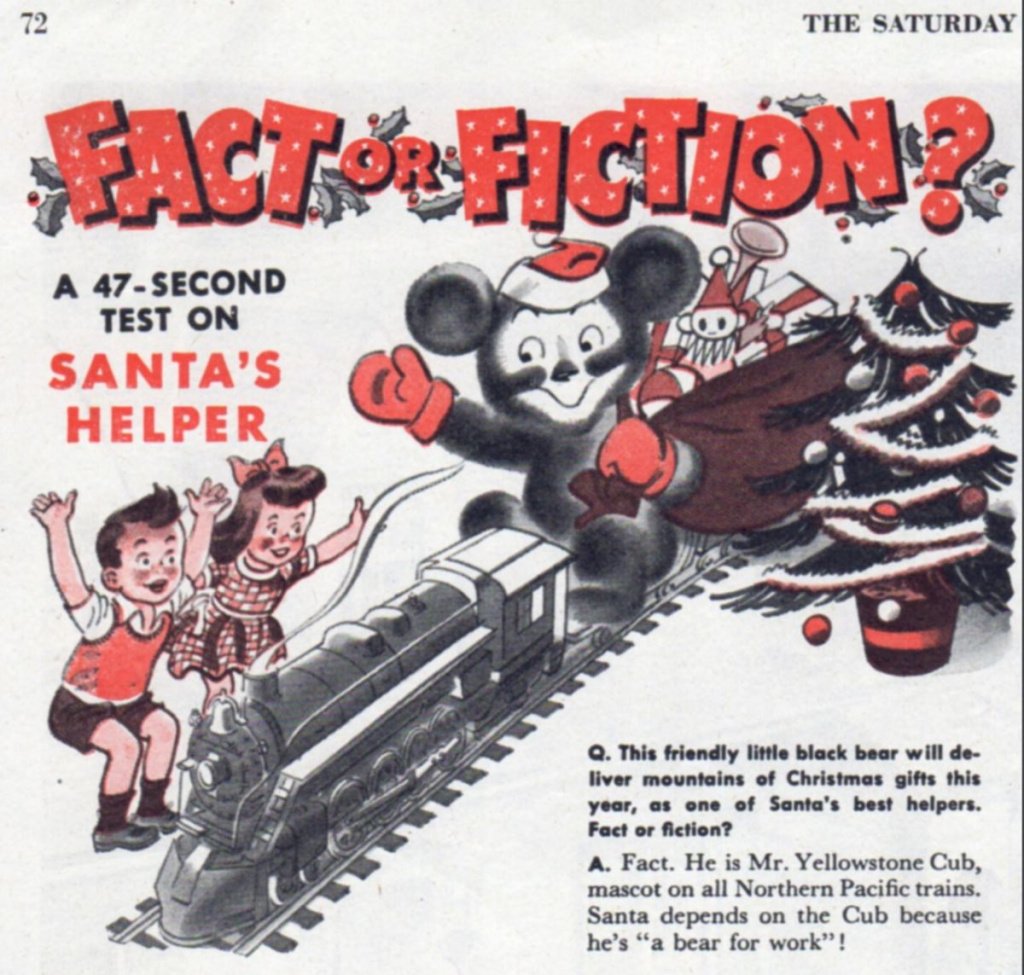
1944 Sat Eve Post: Mr. Yellowstone Cub on train: NPRHA collection at PNRA, Burien WA
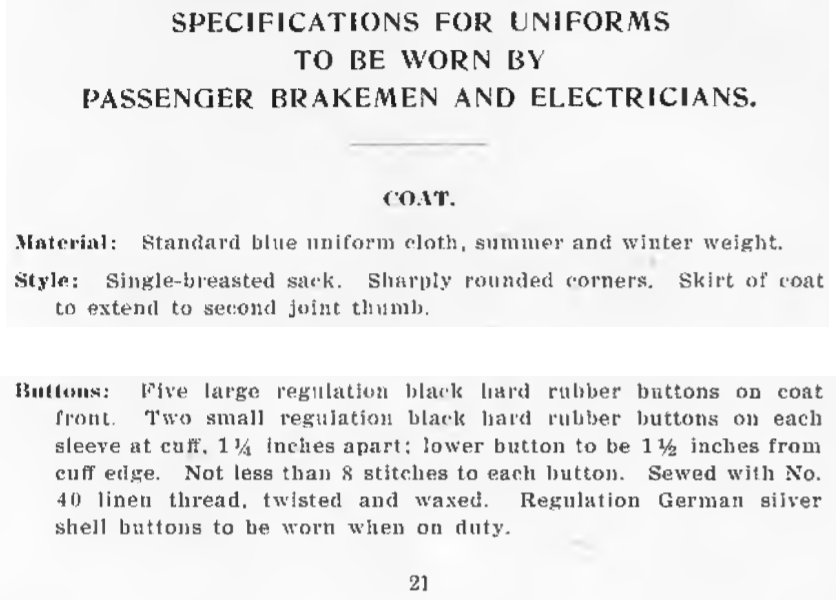
The 1913 NP Uniform Regulation dictates that the nickel silver color buttons were for brakemen and electricians.
The vintage NP brakeman cap above shows 2 smaller silver-color NP buttons on both sides, holding the knotted decorative cord. This white cord was supposed to be black in 1913, according to the 1913 NP Rules and Specifications Governing Uniforming of Employes (collection at PNRA, Burien WA).
photos: Johnson Frazier
In passenger service, the brakeman (called trainman or assistant conductor) collects revenue, may operate door “through switches” for specific platforming needs, makes announcements, and operates trainline door open and close controls when required to assist the conductor. (Wikipedia: Brakeman)
NP Conductors and Train Auditors used gold-colored buttons. photo: William Hentges
Passenger service conductor typically starts out as brakeman, assisting train operations for some years before promoted to become a conductor or train auditor who then wear gold-colored buttons on the uniform.
Jimmie Rogers, a popular singer in the 1930s as The Singing Brakeman, served as a breakman in his early life. He took the job formerly held by his older brother when the brother was promoted to become a conductor. (Wikipedia: Jimmy Rogers)
Brakemen in the earlier years had the dangerous work of slowing down the moving train, sometimes on downgrades or on sharp curves, as the brake wheels were located on the top of each car.
The braking effort achievable was limited and it was also unreliable, as the application of brakes by [breakmen] depended upon their hearing and responding quickly to a whistle for brakes.[1]
(Wikipedia: Railway Brake)
During the early days of railroading, one of the most deadly jobs in America was that of brakeman, who worked from the top of moving trains in all weather (Wikipedia)
Recommended read: “The Great Northern Railway Meets Glacier National Park” Idaho State Button Society Bulletin, Nov. 2021[/restrict]
The Route of the Great Big Baked Potato is the first installment of the 4-part Northern Pacific series in the WRBA Button Aerogramme. Stay tuned for more.

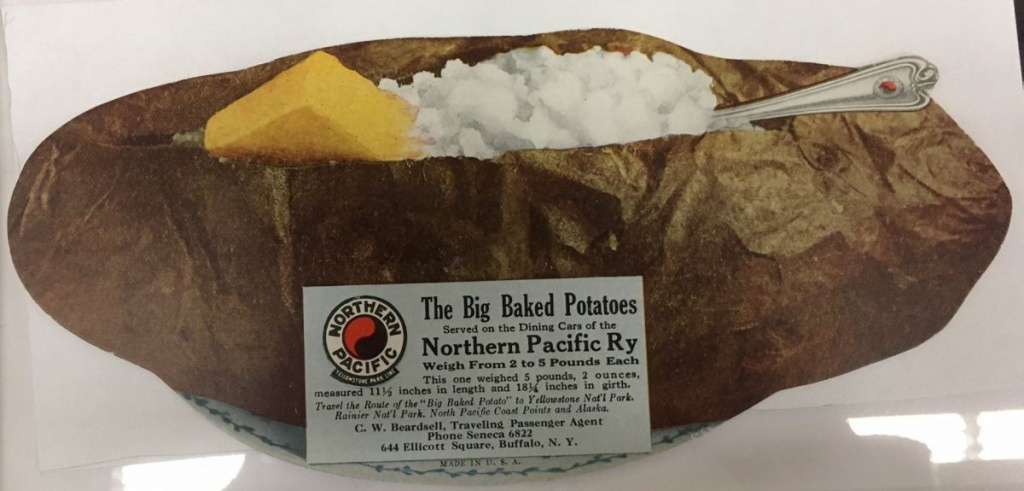
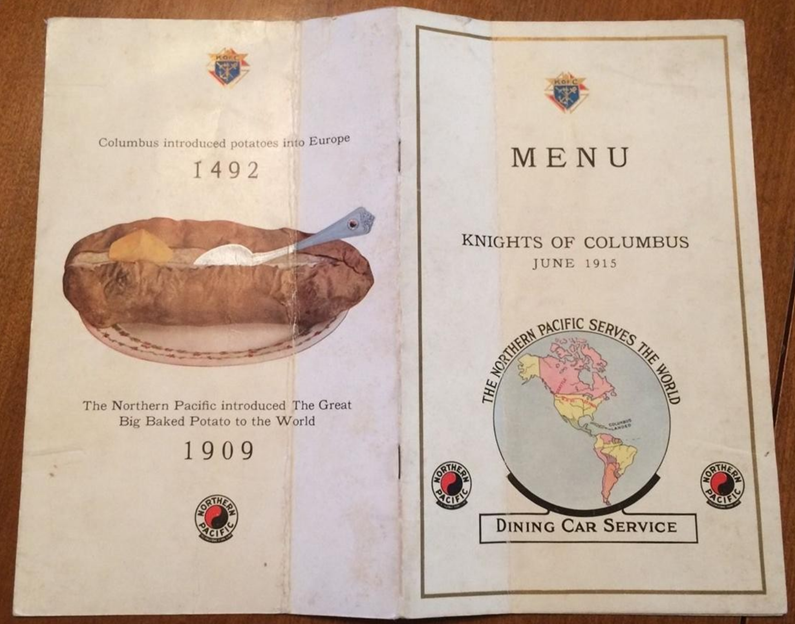 1915 menu photo: Worthpoint.com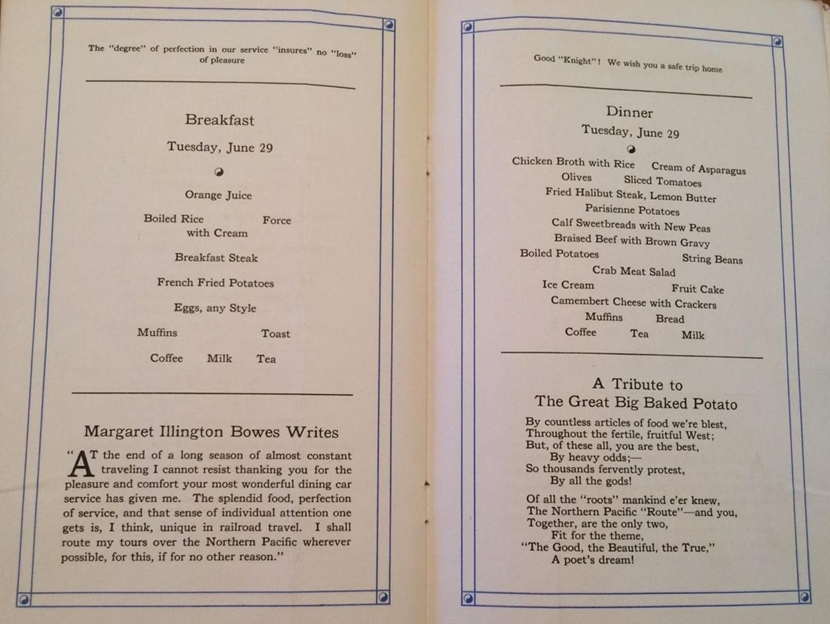

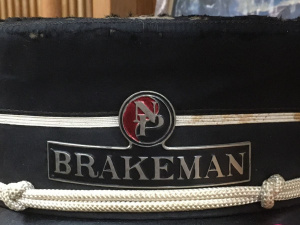
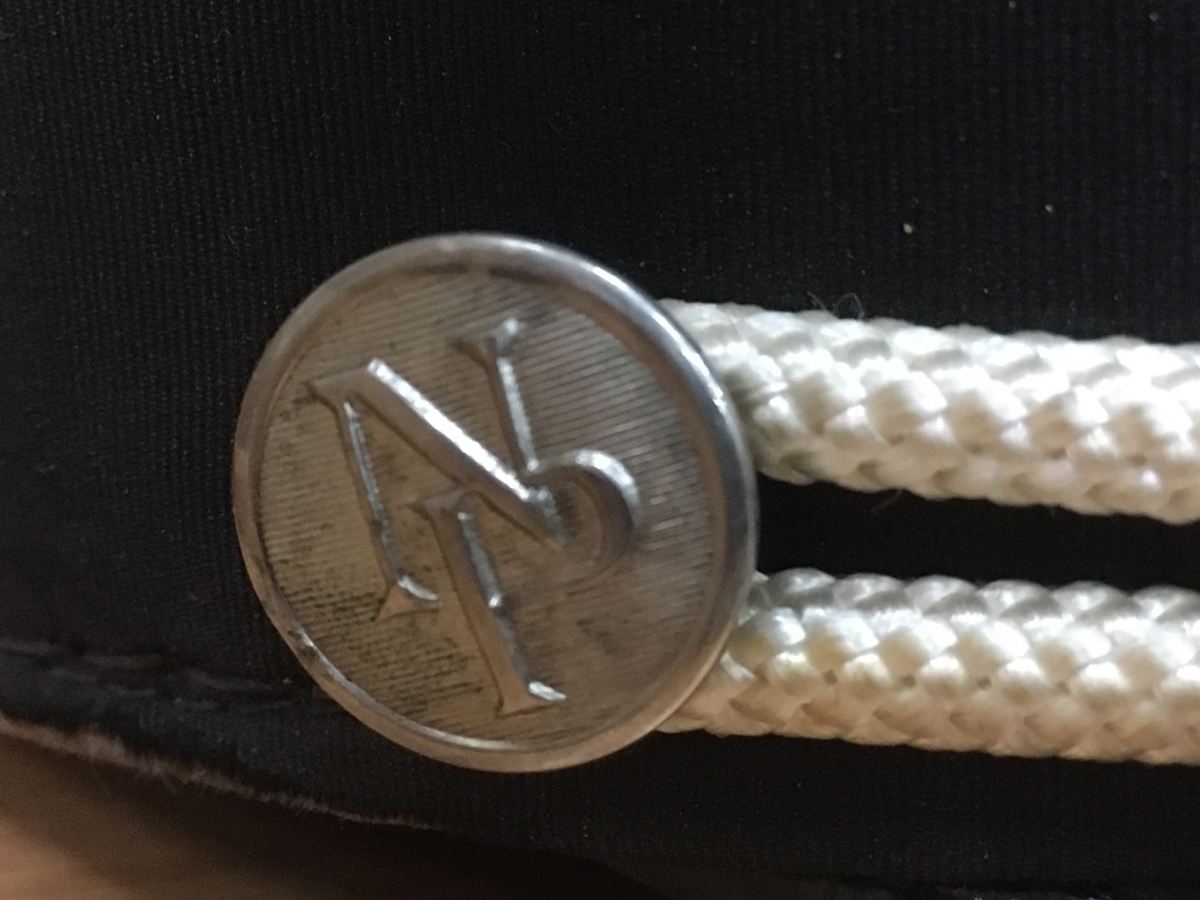
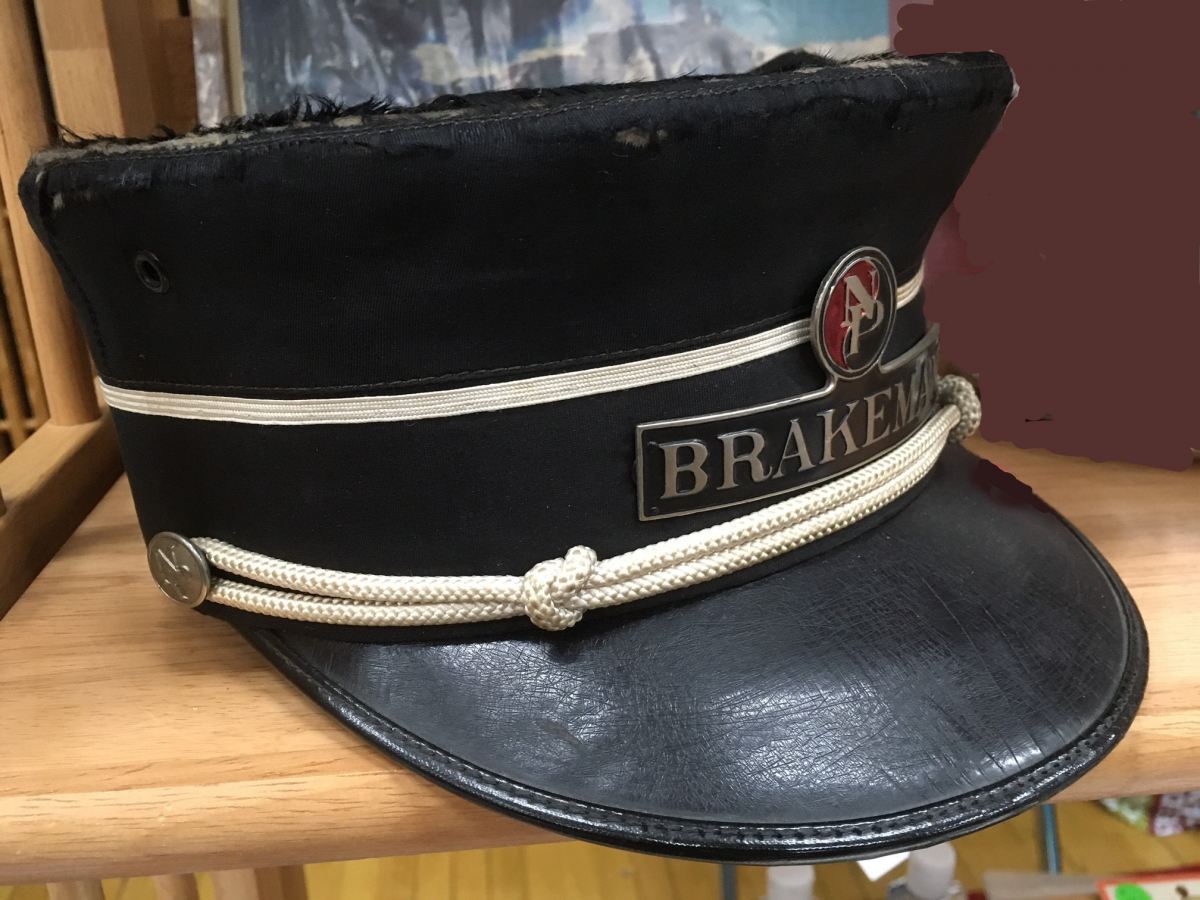 The vintage NP brakeman cap above shows 2 smaller silver-color NP buttons on both sides, holding the knotted decorative cord. This white cord was supposed to be black in 1913, according to the 1913 NP Rules and Specifications Governing Uniforming of Employes (collection at PNRA, Burien WA).