
Background/Story
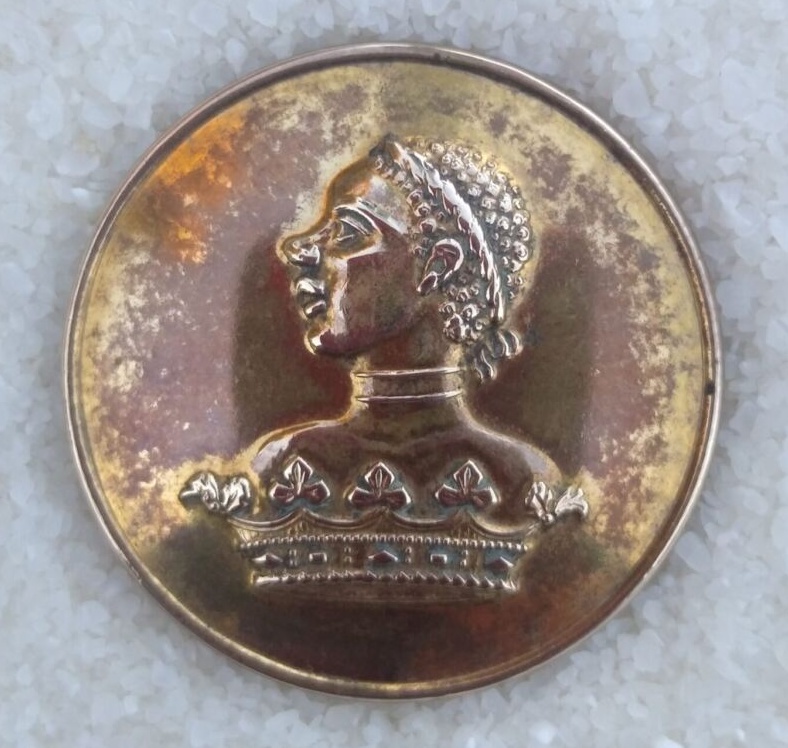
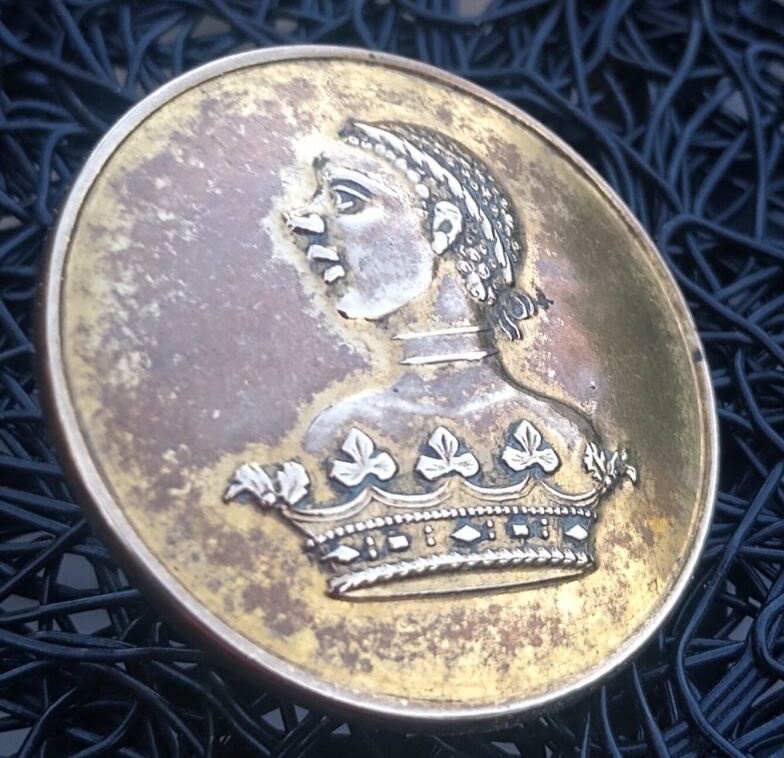
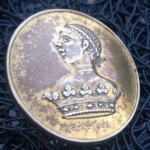
This button is noteworthy for depicting a young black lady* emerging from a ducal crown, wearing a Victorian fashion choker. Although interpretations of heraldic imagery can vary, the design may have been intended to evoke exotic or colonial associations that were in vogue during that period.
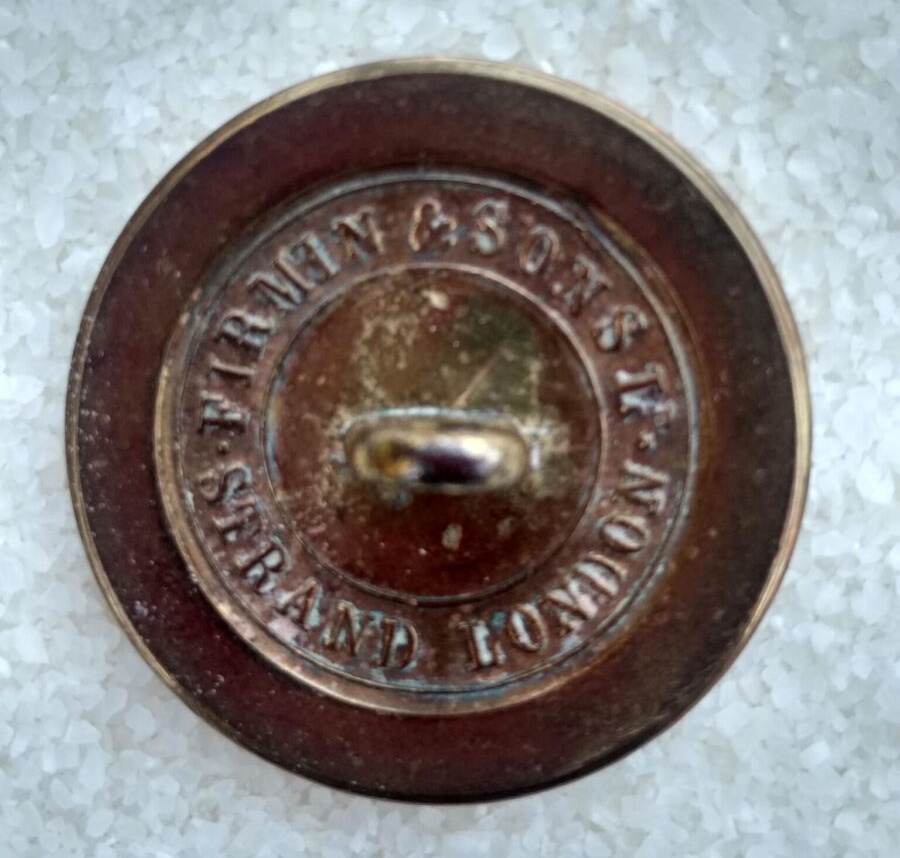
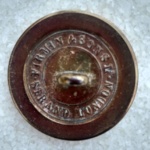
Firmin & Sons was among the most respected makers of livery buttons in the 19th century. Their products were commissioned by families and organizations legally entitled to display specific heraldic designs (such as coats of arms). In this case, the back mark on the button indicates that it was likely made between 1875 and 1894 (see Tom Skovronsky’s Livery Buttons: Identification, Classification and Heraldry Vol. 2.) This manufacturing period coincided with an era when Britain’s involvement in Africa was rapidly intensifying.
*The binary gender of the figure depicted on this button remains unverified.
The Ducal Coronet

By Sodacan – Own work, CC BY-SA 3.0, Link
The crown on this button, with strawberry leaves, is known as a ducal coronet. However, it may be a “crest coronet” rather than a “rank coronet” since the button design cannot be matched to any dukes during that period (Wikipedia) in the Fairbairn’s Book of Crests of the Families of Great Britain and Ireland. Let’s explore further.
Crest Coronet vs Rank Coronet
- Lesser families (e.g., baronets, knights, and gentry) were sometimes allowed to use a ducal coronet as a crest coronet. A Crest Coronet is distinct from a rank coronet. Its use signified prestige or noble aspirations rather than formal rank.
- The crest coronet was often a visual enhancement and did not carry the same implication as a coronet in the arms proper (Wikipedia).
- Families with historical or marital ties to dukes or other high-ranking nobility might incorporate a ducal coronet into their crests as a nod to that connection.
For example, some families with distant links to noble houses adopted heraldic elements like coronets to reflect their association, even if they did not inherit the corresponding title.
On this button, the ducal coronet might symbolize:
- Authority or leadership: Families who held local influence or had significant achievements (e.g., military, political, or colonial) might include such a symbol to represent their status.
- Historical connections: It could point to a family’s historical involvement in noble service or their ancestral ties to a higher rank.
- Artistic embellishment: In some cases, it was simply used as an attractive and prestigious ornamentation.

This button is featured in the February 2025 Aerogramme Monthly.