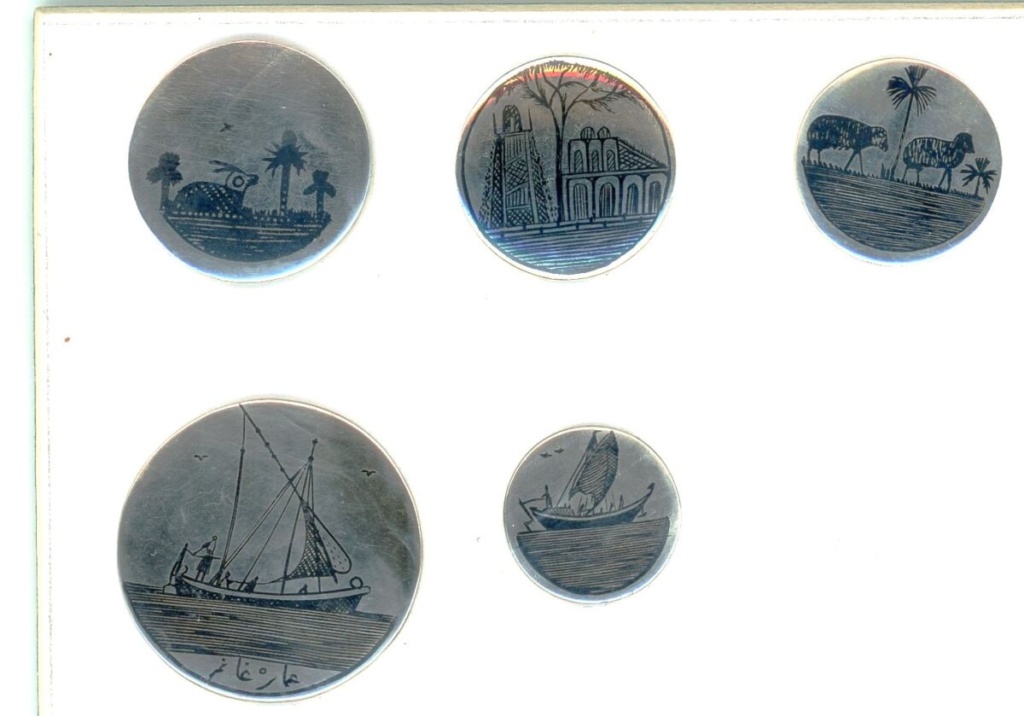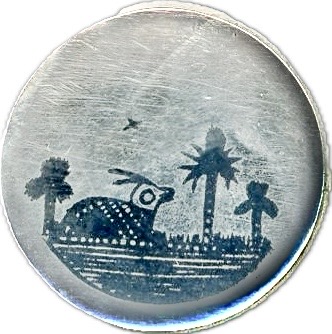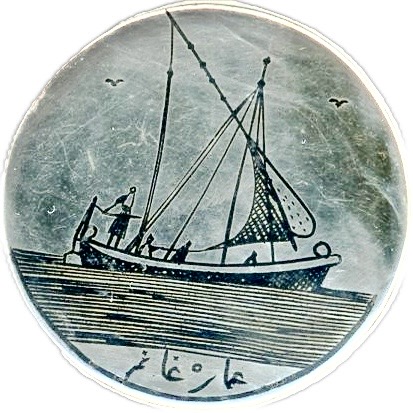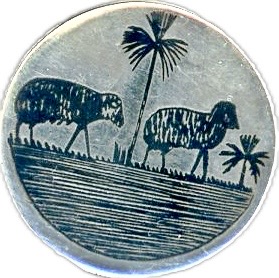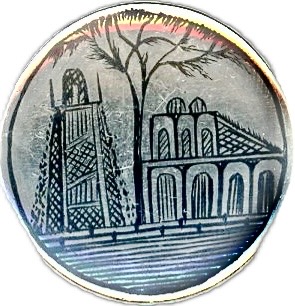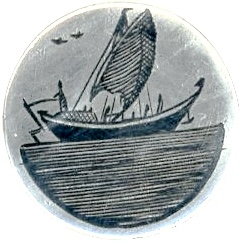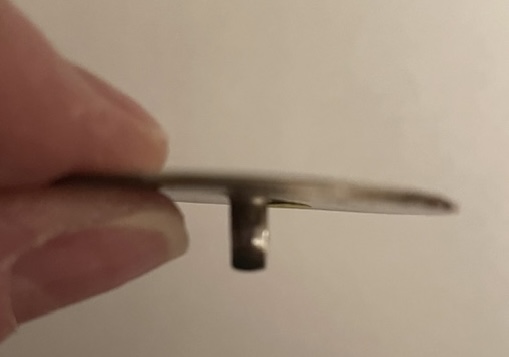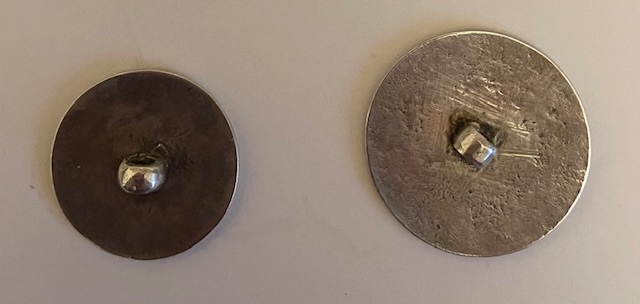
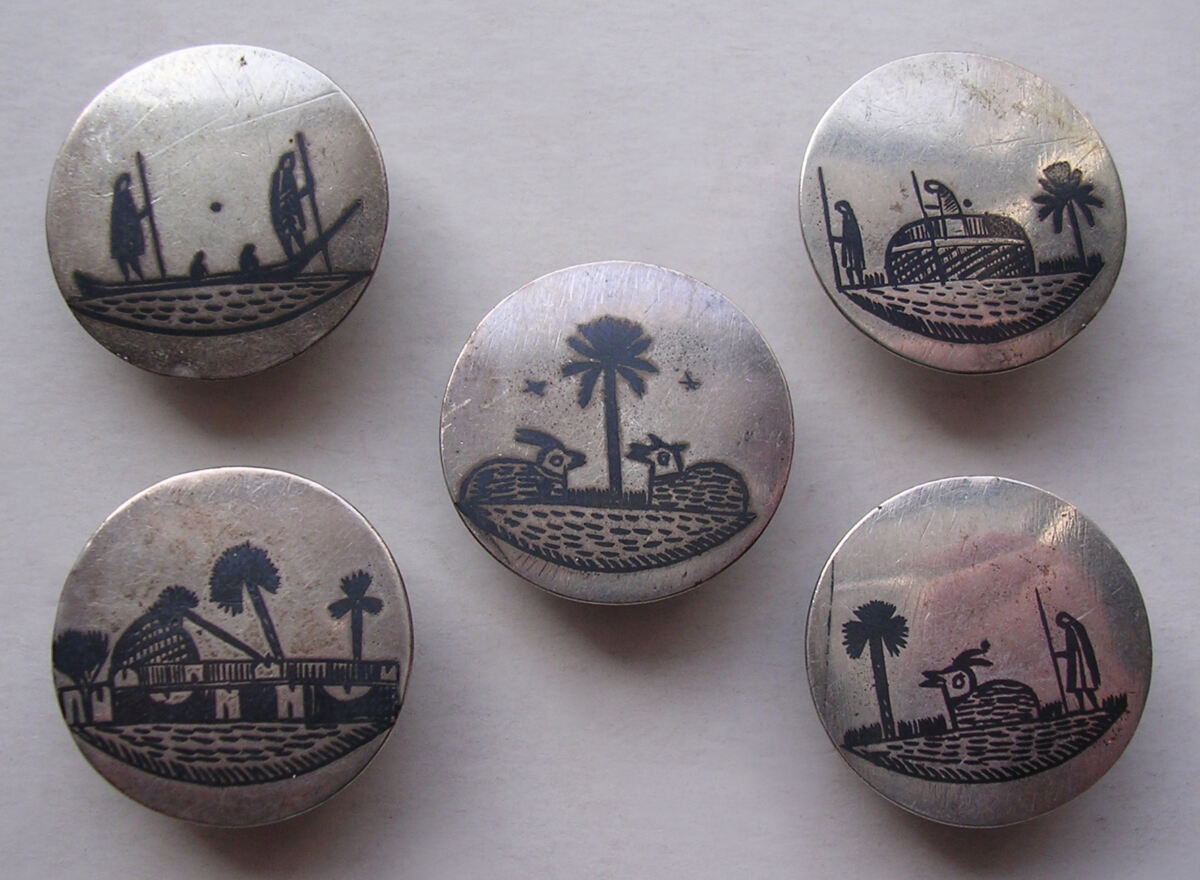
Buttons like these were made in the region of the Persian Gulf, mainly in Iraq, in the first half of the 20* century, as souvenirs for tourists. Many were brought home by western troops at the end of the Second World War (1945). Niello work of this kind was used for all sorts of small souvenir wares, such as napkin rings and cruets, ashtrays, cigarette cases and compacts, bracelets, brooches, cufflinks, rings and pendants, as well as buttons. In fact, buttons are rather scarce among the range of items available. The craft of nielloing on silver was introduced to the area by Russian Muslims, fleeing persecution in the Caucasus in the late 19" century, and can be found on native jewellery in Jordan and Syria, as well as the Gulf.
This kind of niello work is usually of good quality sterling silver, although it is almost never marked. It can be distinguished from Russian niello by the use of camels, palm trees, dhows, ancient ruins, and other typical scenes of Arab life as decorative motifs. Fine pieces occasionally carry the maker's name, in Arabic characters in niello, on the front.
- A Collector’s Guide to Peasant Silver Buttons, p. 60. Courtesy of Jane Perry.
Jane also notes:
This niello is also often called 'Marsh Arab', which would imply South Iraq, bordering the Persian Gulf. Most was probably produced close to the places where the buyers were, in urban centres. The fact that it was also made in Syria and Jordan (and possibly Egypt - I'm sure I saw a niello button with the pyramids once) suggests that it was produced over a wide area of western Asia.