


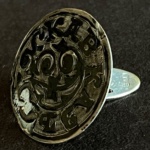
Background/Story
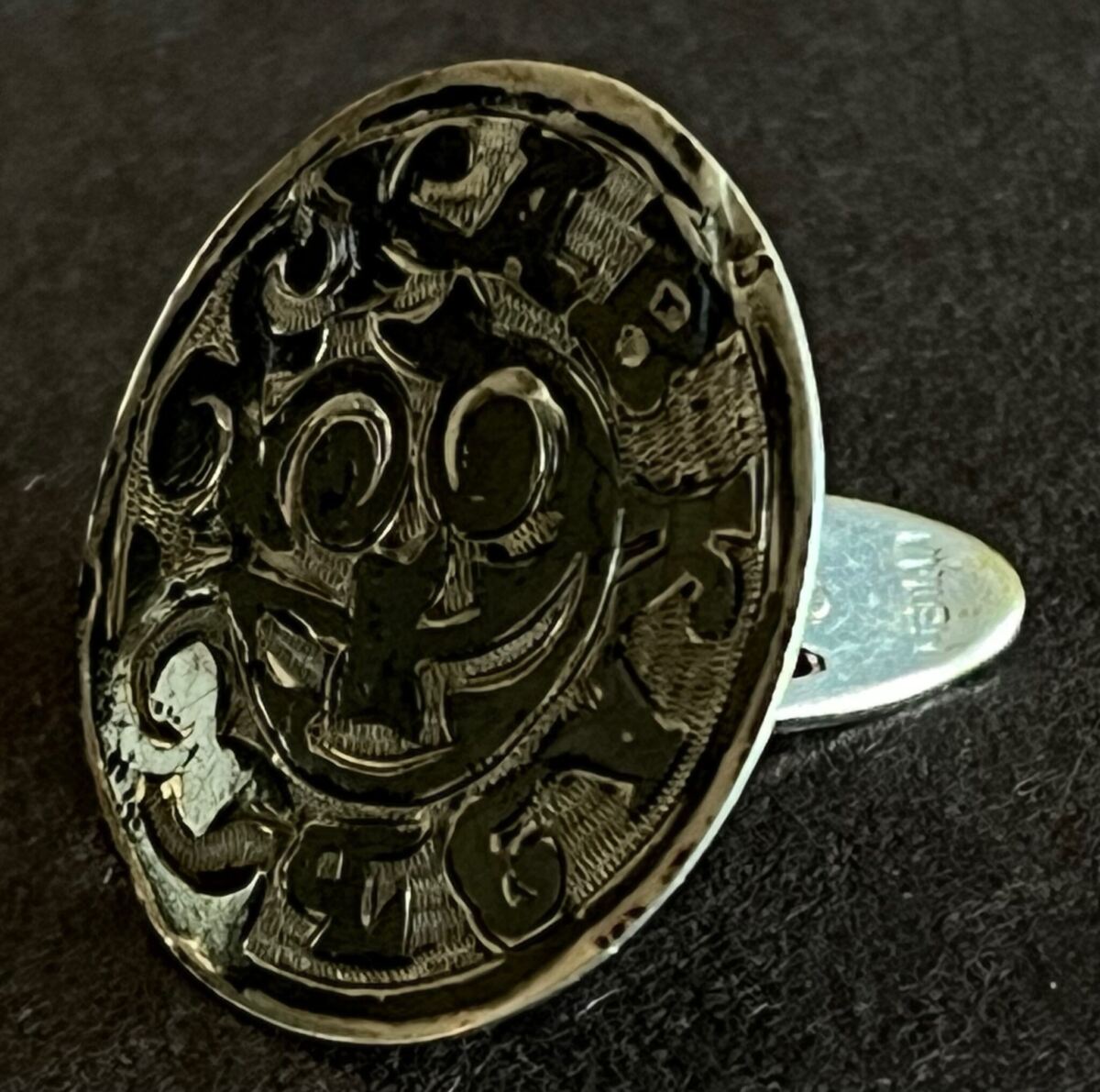
This cufflink is featured in the 2024 December issue of the Button Aerogramme. View also other niello buttons from the Caucasus mountains region in our in-depth study section.
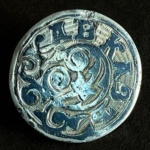
By the end of the 19th century, Caucasus-style niello was very popular throughout Russia, and was being made by fashionable silversmiths in St. Petersburg and Moscow, as well as in its original homeland [of the Caucasus]. The flat buttons shown here are typical of this period of production, and were made to wear with fashionable dress of the time, not traditional Russian costume. The quality of the silver and niello work is much higher than that used for the harness mounts […].
A Collector’s Guide to Peasant Silver Buttons, p. 59, by Jane Perry.
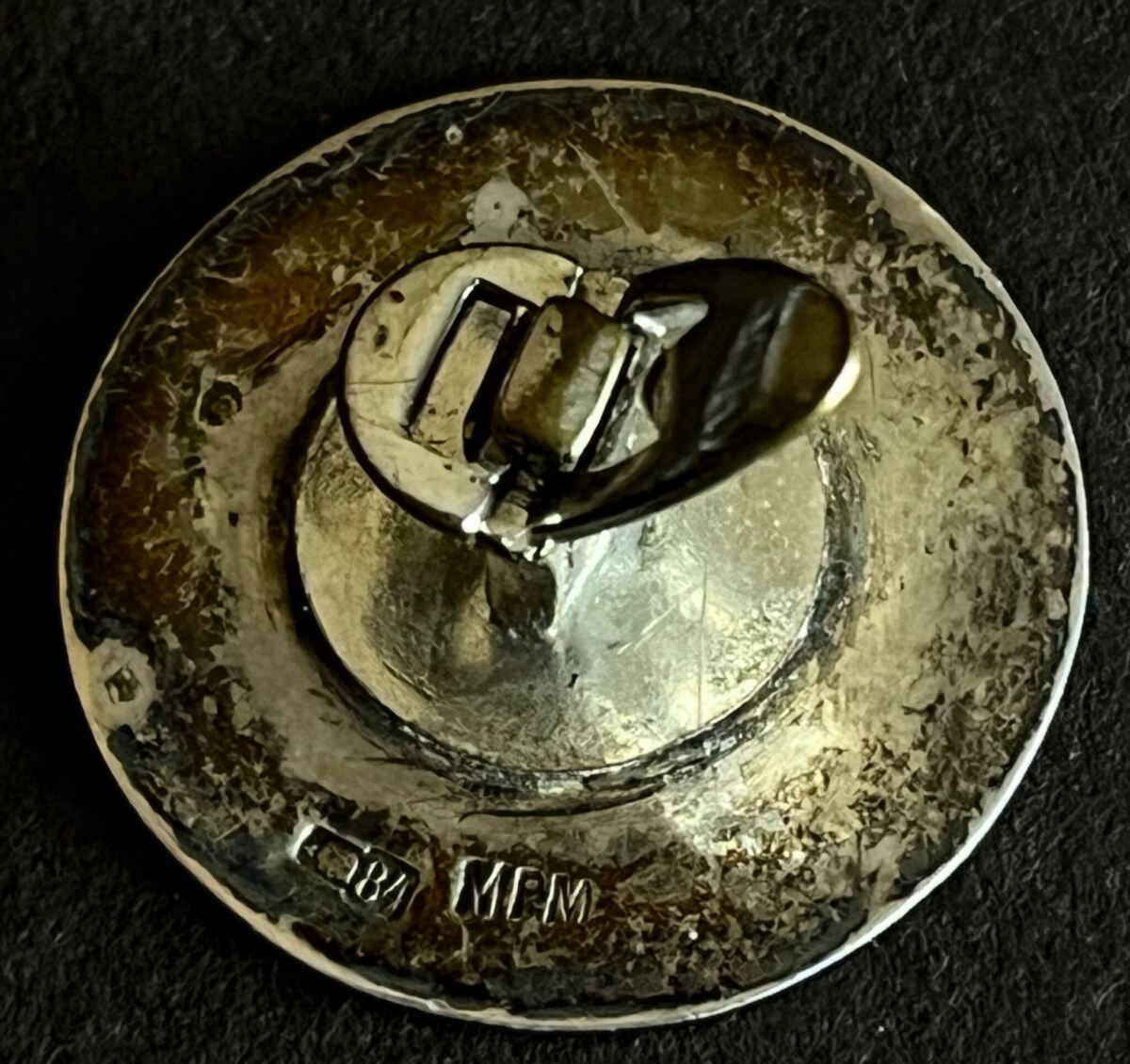
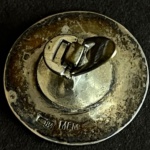
The back mark of “84” under the zolotnik system also dates it from before 1920.
A zolotnik or zolotnyk was … used from the 10th to 20th centuries, its name is derived from the Old East Slavic word золото (zoloto), meaning “gold“. As a unit, the zolotnik was the standard for silver manufacture, much as the troy ounce is currently used for gold and other precious metals.
This unit was originally based on a coin of the same name. The zolotnik circulated in Kievan Rus’ until the 11th century; it was equal in weight to the Byzantine Empire’s solidus. (Wikipedia: zolotnik)
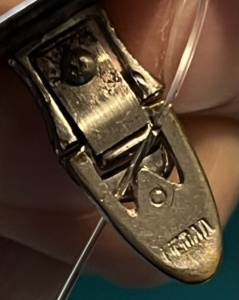
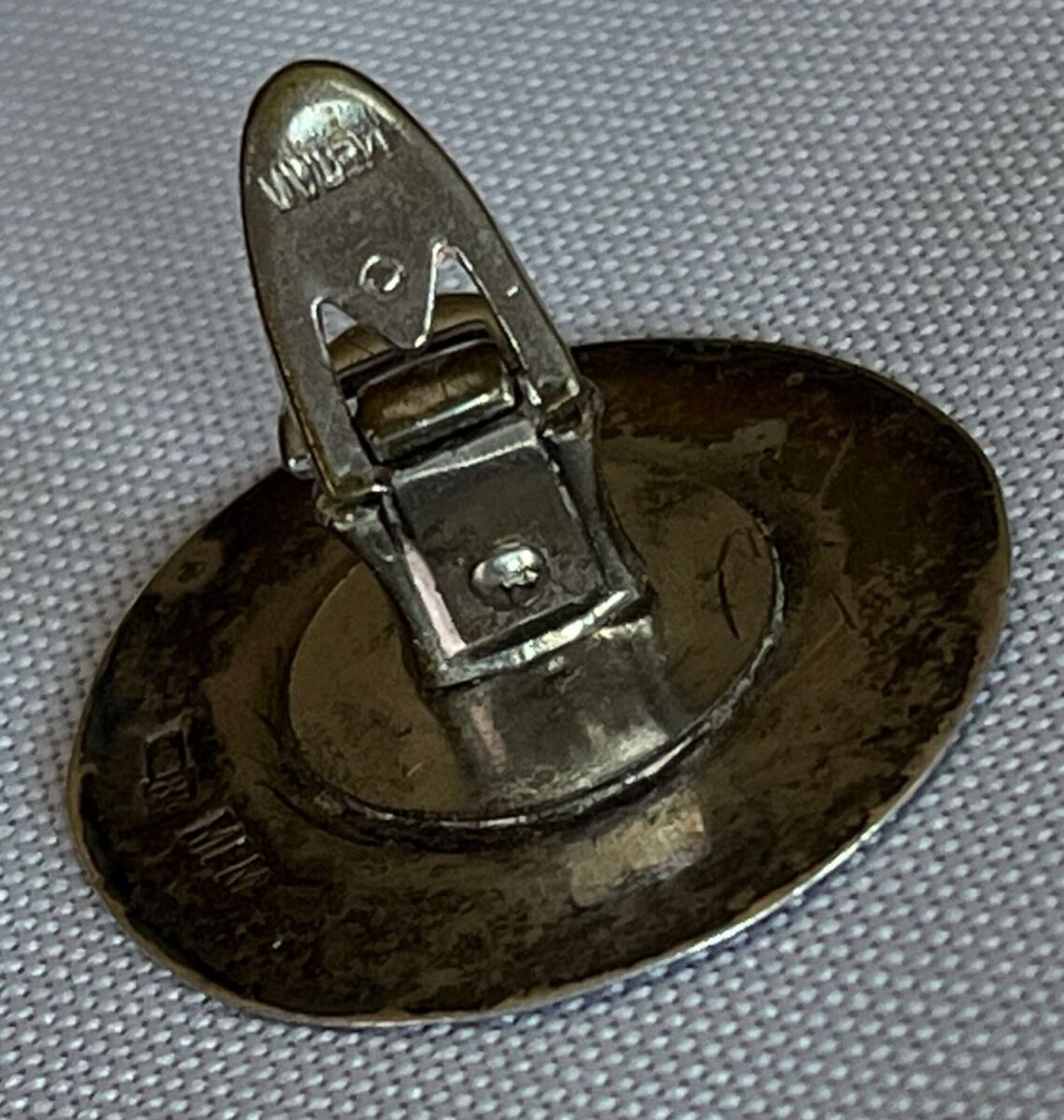
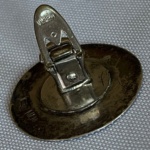
The style of this cufflink post matches the age of the front disk, indicating that this piece was created as a cufflink originally and not a later-date conversion. National Button Society has a wealth of resources on the topic of cufflinks and/or studs with hundreds of visual examples on 22 pages, including some dated patents with visual drawings.
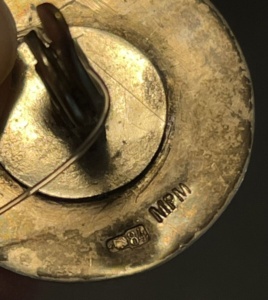
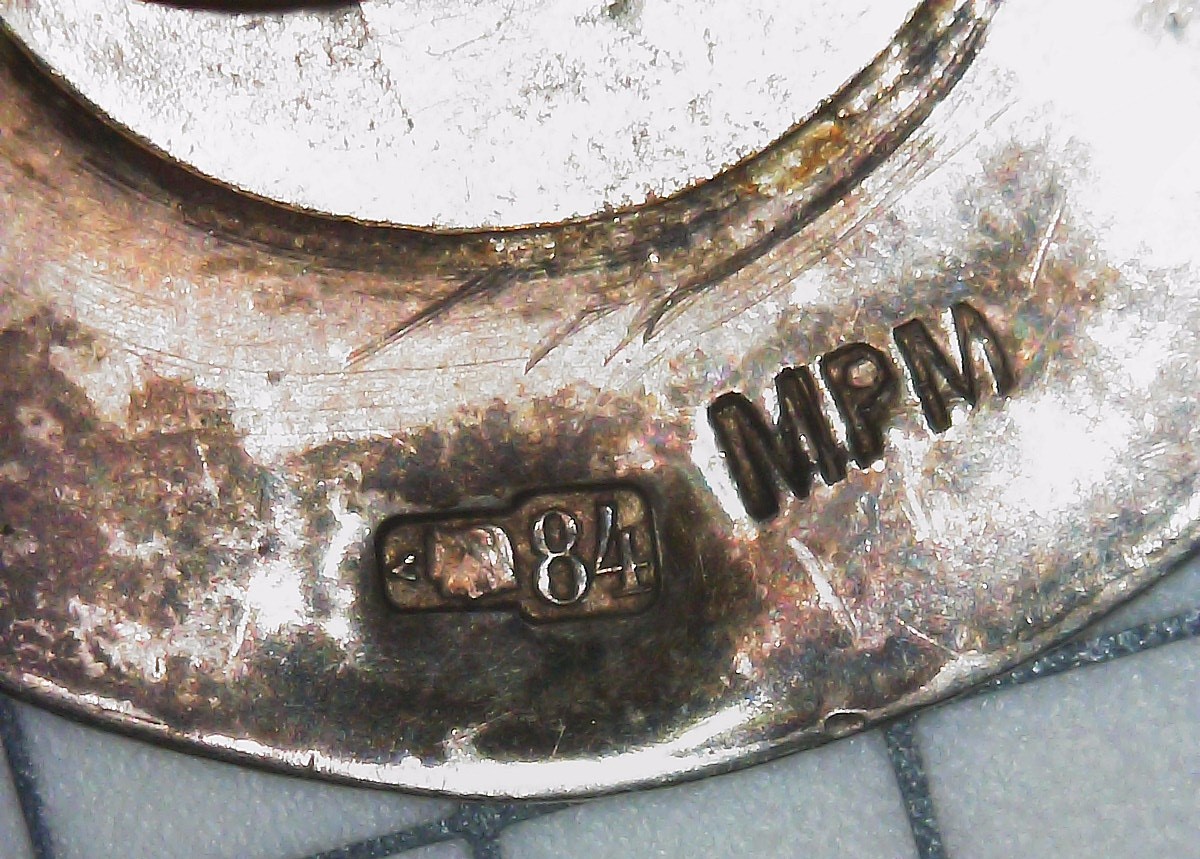
Russian silver mark was identified and verified by Jane Perry, with the reference book:”GOLD AND SILVER CRAFT 15th–20th Centuries [Territory of the USSR]” by М. М. Постникова-Лосева, and Н. Г. Платонова, Б. Л. Ульянова (1995).

The flask mentioned in the above source of reference may be this one – it is the only 20th-century silver and niello flask listed by the Russian State Historical Museum (https://shm.ru/), and the niello style is very similar, as observed by Jane Perry.
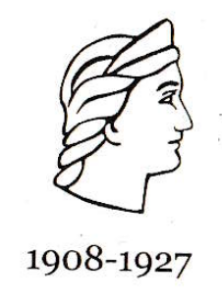
Put into effect in 1898 and until 1908, the profile wearing a kokoshnik, a peasant woman’s headdress, was facing left. In 1908 the design facing to the right was introduced and was in use until 1927 when the new Soviet style marks were introduced.
The “shovel” shape framing denotes slightly lower grade of silver than the hallmark framed in the “oval” shape, although rare variations do exist.