
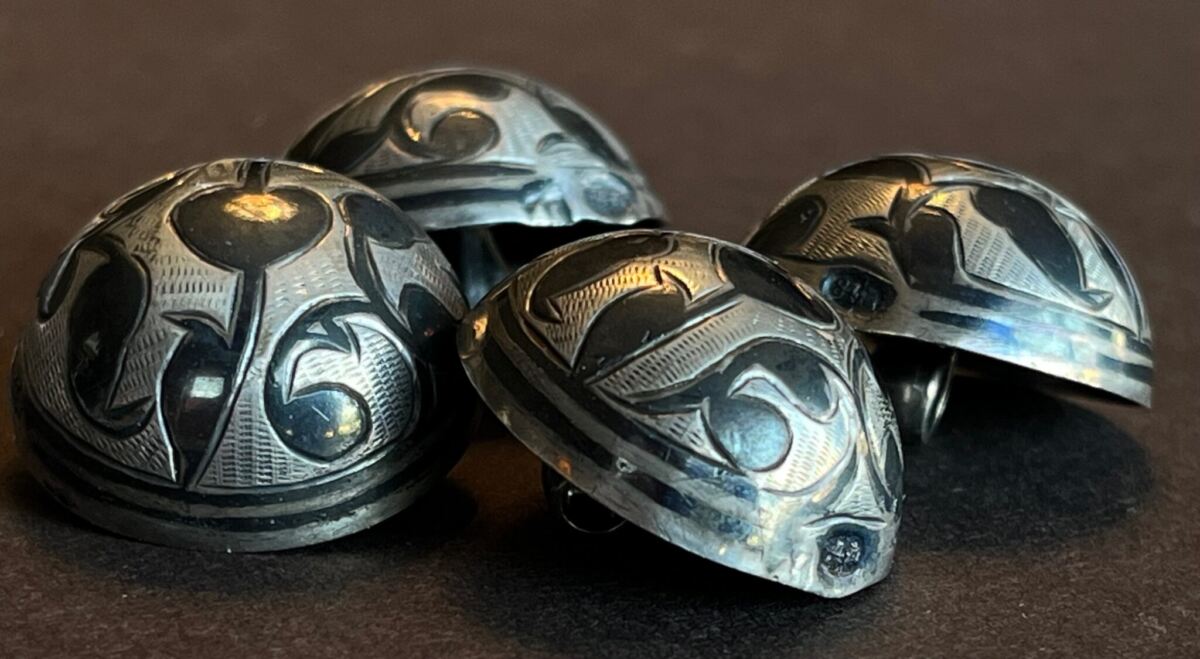
Silver crafting in the Caucasus, particularly in the mid to late 19th century, was deeply intertwined with the region's cultural and social identity. This period saw the flourishing of silver craftsmanship, especially in the decoration of traditional clothing and accessories, reflecting both local traditions and cross-cultural influences stemming from the region's position at the crossroads of Europe, Asia, and the Middle East.

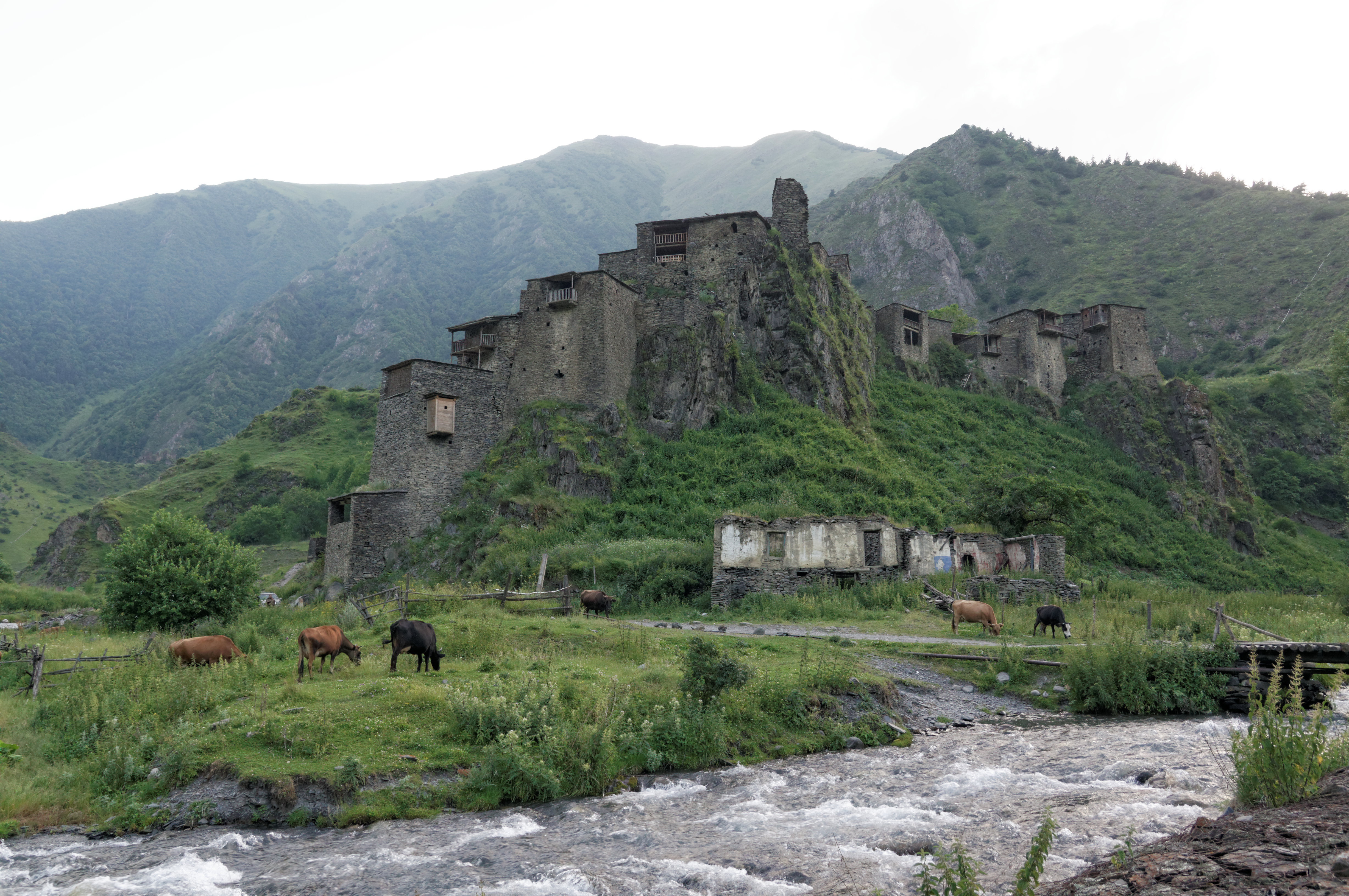
Mt Shkhara as seen from Khalde in the Caucasus Mountains. (Русский: Вид из Халде на Шхару и прилегающие горы.)
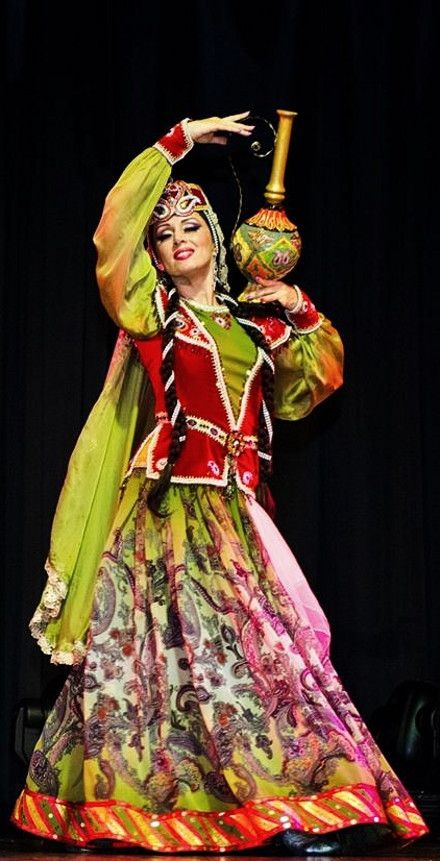
Silver was more than a decorative material; it symbolized status, wealth, and heritage. Silver ornaments were often used in dowries, ceremonial attire, and festive occasions. They also played a role in reinforcing tribal, ethnic, and familial affiliations. Craftsmen in regions such as Dagestan, Azerbaijan, Chechnya and Armenia developed distinctive styles, often incorporating filigree, engraving, repoussé, and niello techniques. Patterns commonly included geometric motifs, floral designs, and intricate lace-like filigree work, which were deeply rooted in Islamic and Caucasian artistic traditions.
Use of silver in clothing was mainly for:
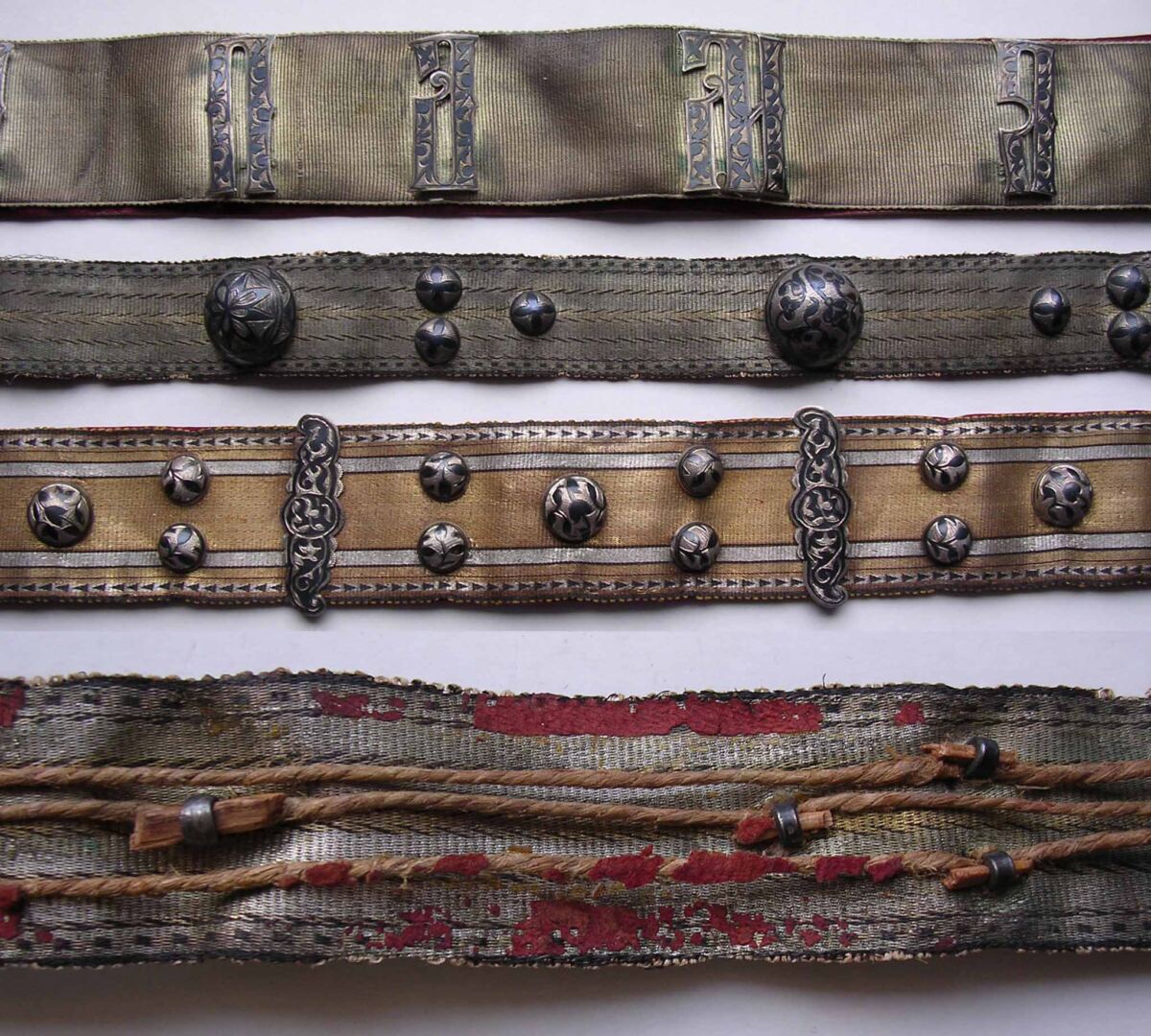
Belts: Silver belts were highly elaborate and a staple of both male and female attire. For women, these belts highlighted their waists, while for men, they conveyed martial valor and social prestige.
Buckles and Clasps: Silver clasps, often encrusted with gemstones or engraved with intricate designs, adorned robes, capes, and headscarves, functioning as both practical fasteners and ornamental features.
Jewelry: Earrings, necklaces, and bracelets were integral to women’s clothing, often showcasing the skill of local silversmiths. Men's attire also featured silver in the form of amulets or weapon adornments.
Weaponry and Accessories: Men's daggers (kinjals), pistols, and rifle holsters were often richly adorned with silver, combining functionality with artistic expression.
The silver craft of the Caucasus was supported by robust trade networks connecting the region to Persia, the Ottoman Empire, and Russia. This exchange introduced new stylistic elements and materials, enhancing the diversity of designs. The mid-19th century, in particular, saw increasing Russian influence as the empire consolidated its control over the Caucasus, leading to shifts in craft production and patronage.
Despite external influences, silver craftsmanship in the Caucasus retained its distinctive regional character. It played a critical role in preserving ethnic identities during a time of imperial expansion and modernization.
Today, the rich legacy of 19th-20th century Caucasian silverwork is celebrated as a testament to the artistic and cultural sophistication of the region during this vibrant historical period.


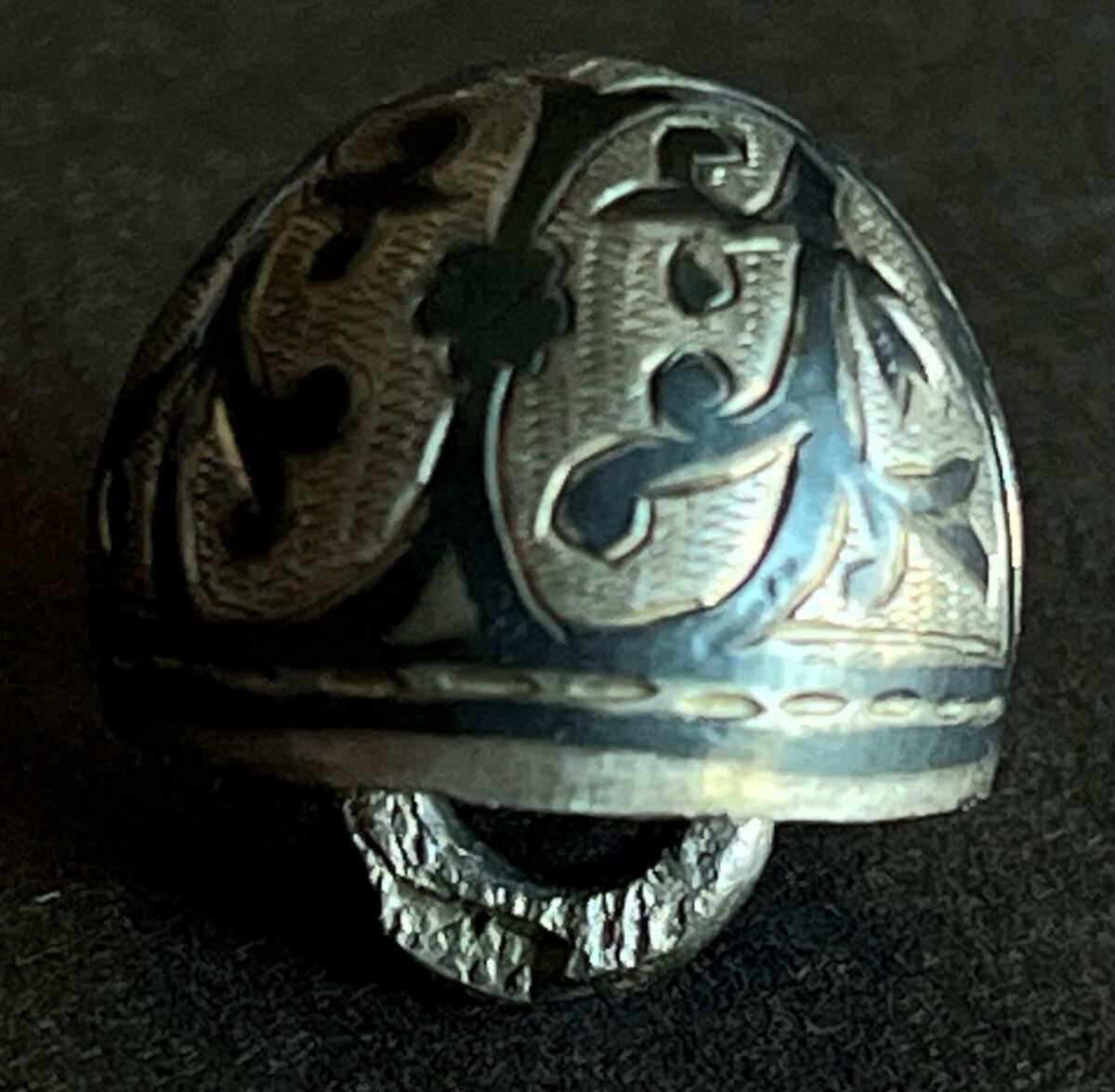


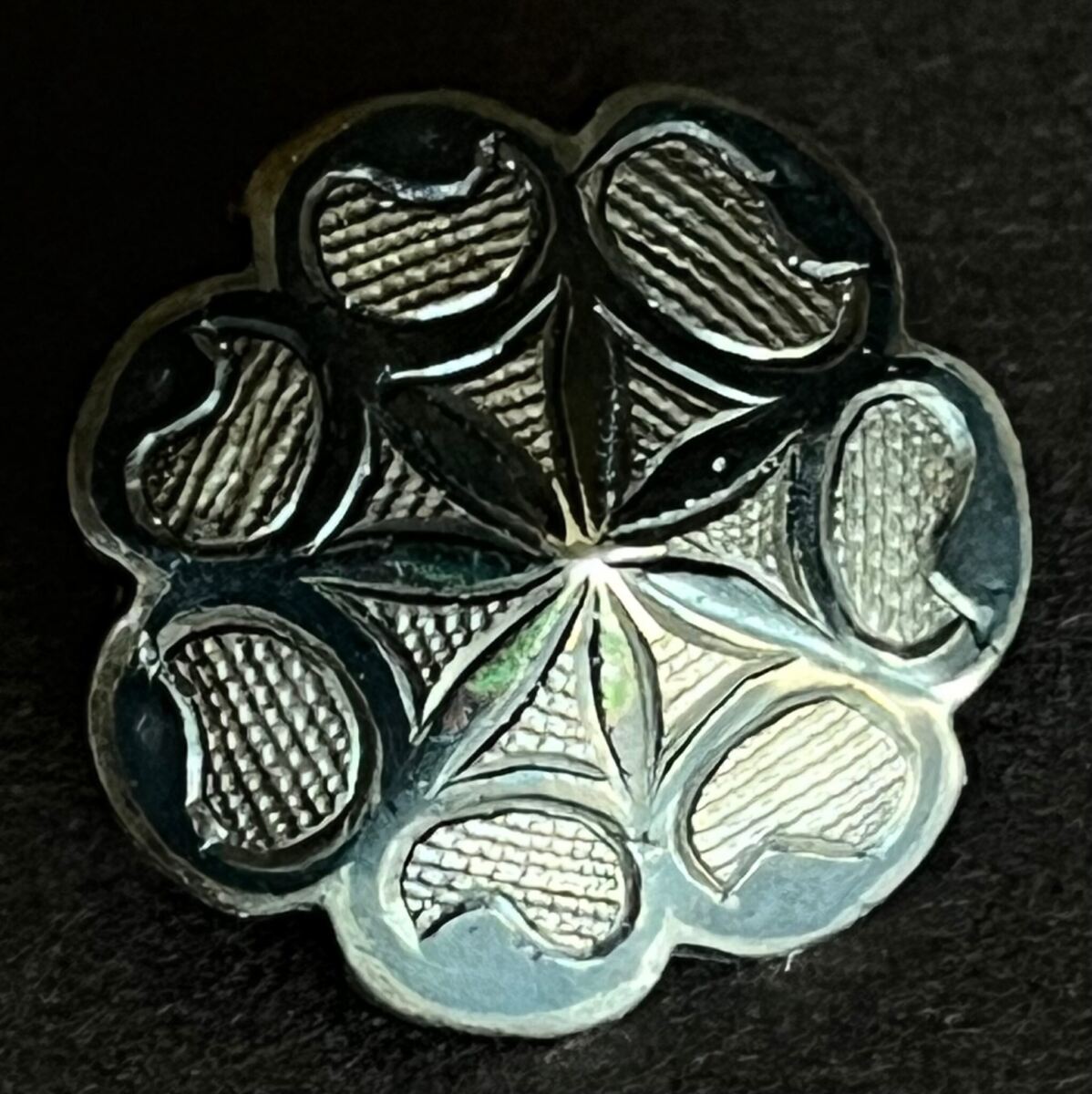


Log in to read this Russian video transcript in English.
The craftsman describes the local custom of wearing the belt and its meanings as he restores an old leather belt from Chechnya.
YouTube: https://youtu.be/UmR0vr9lVf8
The peoples of the Caucasus, or Caucasians, are a diverse group comprising more than 50 ethnic groups throughout the Caucasus.
![The peoples of the Caucasus [Northern]. Russian chromolithography. The end (last third) of the 19th century. Public doman, photo by Vizu.](https://upload.wikimedia.org/wikipedia/commons/6/6d/%D0%9D%D0%B0%D1%80%D0%BE%D0%B4%D1%8B_%D0%9A%D0%B0%D0%B2%D0%BA%D0%B0%D0%B7%D0%B0_19_%D0%B2%D0%B5%D0%BA.JPG "%D0%9D%D0%B0%D1%80%D0%BE%D0%B4%D1%8B_%D0%9A%D0%B0%D0%B2%D0%BA%D0%B0%D0%B7%D0%B0_19_%D0%B2%D0%B5%D0%BA.JPG")
Russia comprises 22 republics, each serving as a federal subject with its own constitution and official language, often representing specific ethnic groups.

Caucasians who are indigenous to the region are classified into 3 main groups: the Kartvelians, the Northeast Caucasians, and the Northwest Caucasians.
In the Caucasus region, the Russian republics are:
- Adygea (Local TV stations in Adygea broadcast content in the Adyghe language, focusing on cultural and educational programming.)
- Chechnya (Grozny TV is a prominent station that offers news, cultural shows, and entertainment in Chechen.)
- Dagestan (GTRK Dagestan provides programming in multiple local languages, reflecting the republic's ethnic diversity.)
- Ingushetia (Local stations in Ingushetia broadcast content in the Ingush language, including news and cultural programs.)
- Kabardino-Balkaria (Local TV stations offer programming in both Kabardian and Balkar languages, focusing on cultural and educational content.)
- Karachay-Cherkessia (Local stations broadcast in these languages, providing news and cultural programming.)
- North Ossetia–Alania (Local TV stations offer content in the Ossetian language, including news and cultural shows.)
These republics are located in the North Caucasus area of Russia, situated between the Black Sea and the Caspian Sea.
Each of these republics has its own unique cultural and ethnic composition, contributing to the rich diversity of the Caucasus region.

Read the story of the Caucasian Mountains in the 2024 December issue of the Button Aerogramme.