
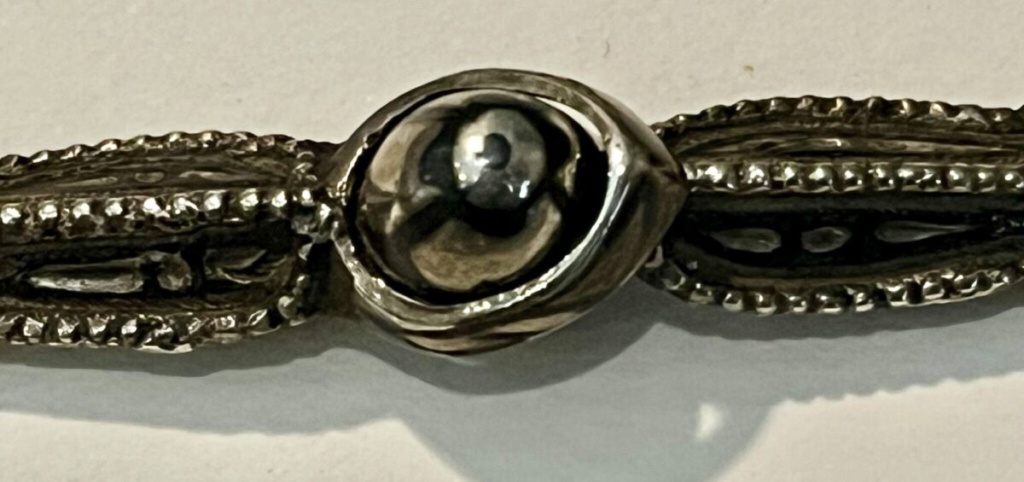
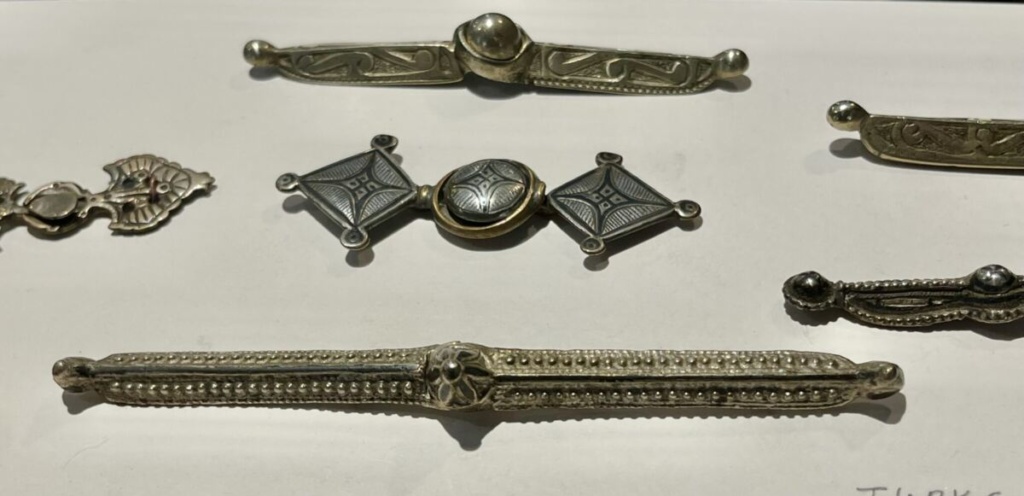
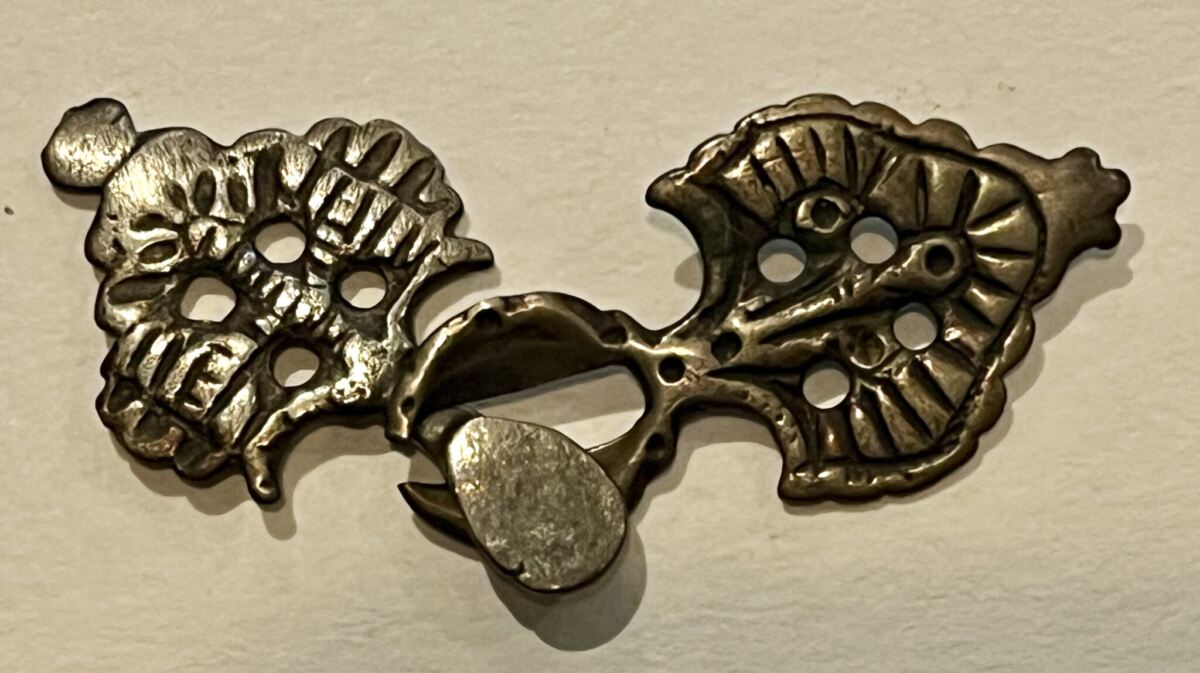
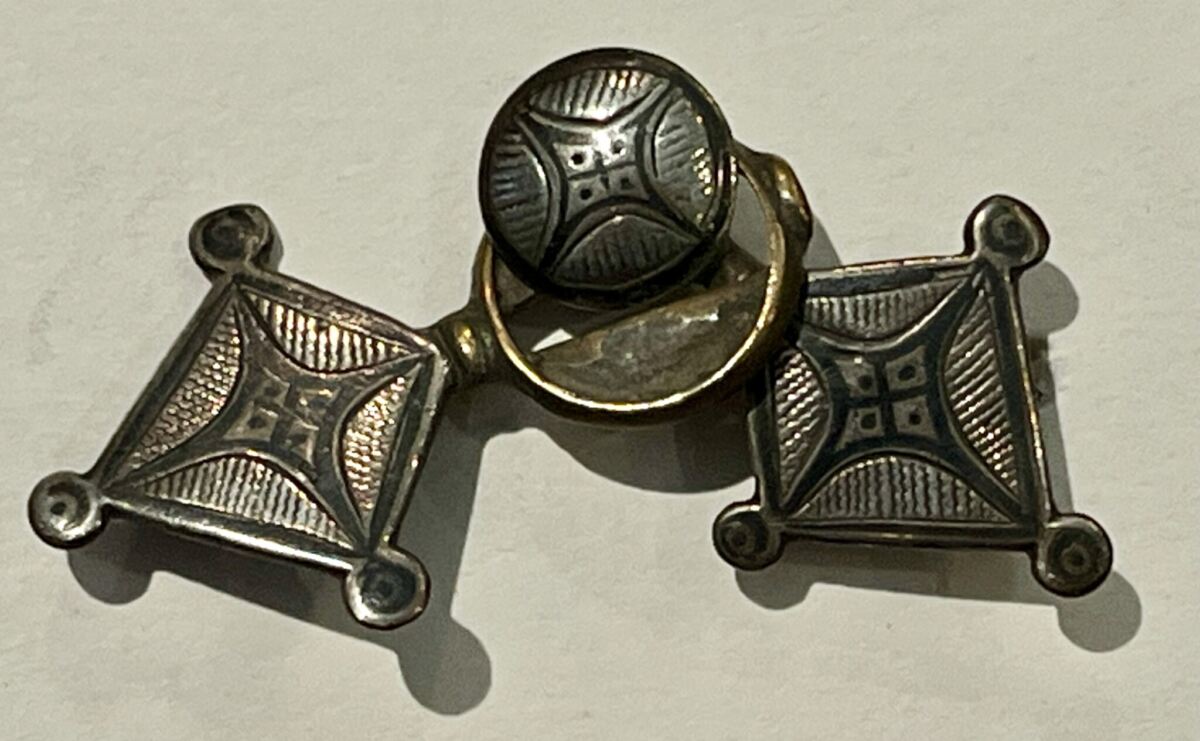
These clasps were found at an antique shop in Turkey in 2001. From the type of niello work, they are more likely from the 19th or early 20th century Caucasus, rather than Turkey itself, according to Jane Perry, Specialist in traditional and regional jewellery from Europe and beyond, a visiting scholar at the Victoria & Albert Museum.
They would have been attached to a narrow belt of similar niello links, or possibly leather decorated with the niello buttons. See our other story on the buttons from the Caucasus region.
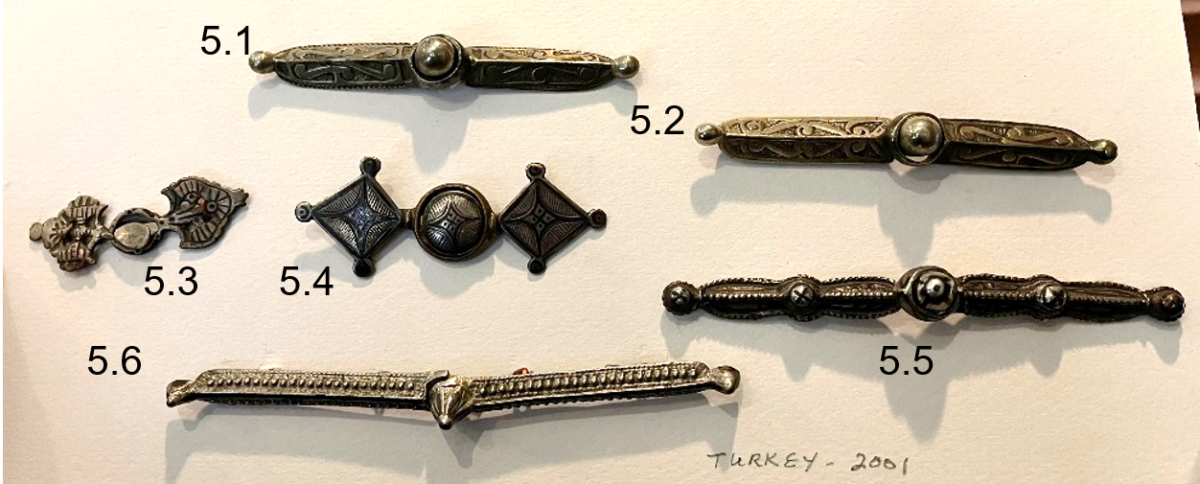
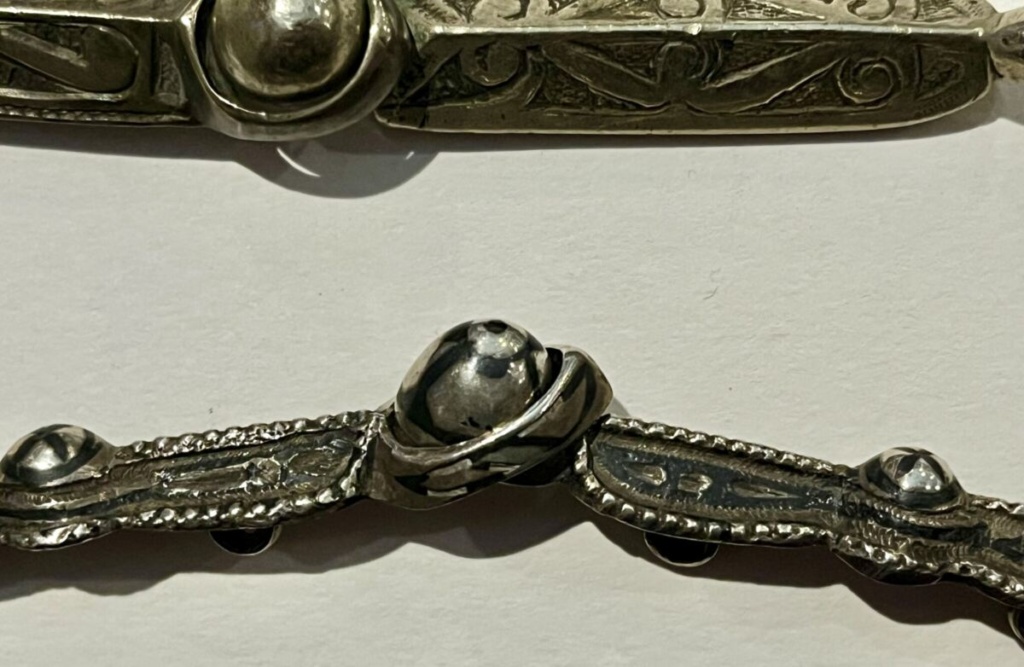
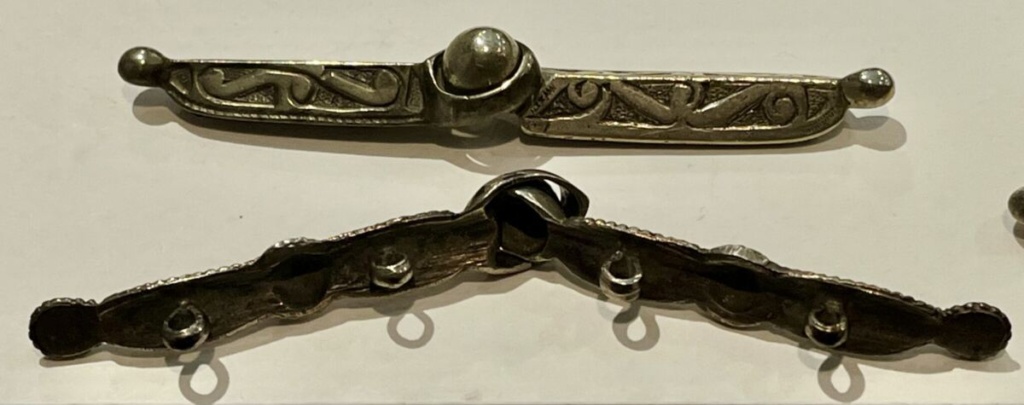
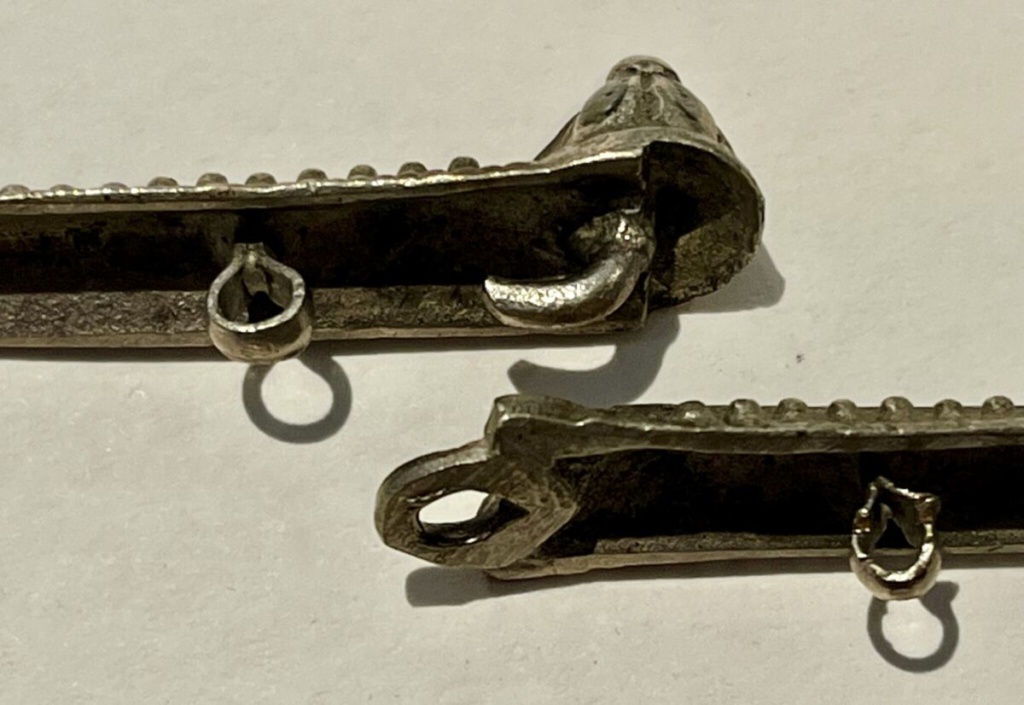
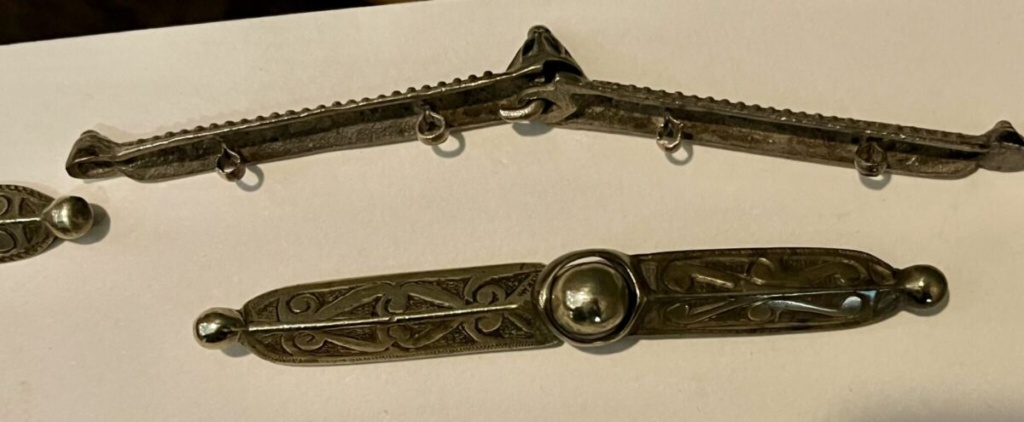
Niello-decorated bar clasps. Each long clasp is made as a paired closure: the two sides engage at the center by inserting the small ball-shaped section through the loop, then straightening the pieces so the bar aligns and holds securely. Their elongated form made them both practical fasteners and decorative accents across the garment or the belt.
Each part is to be stitched on through shanks to the fabric.
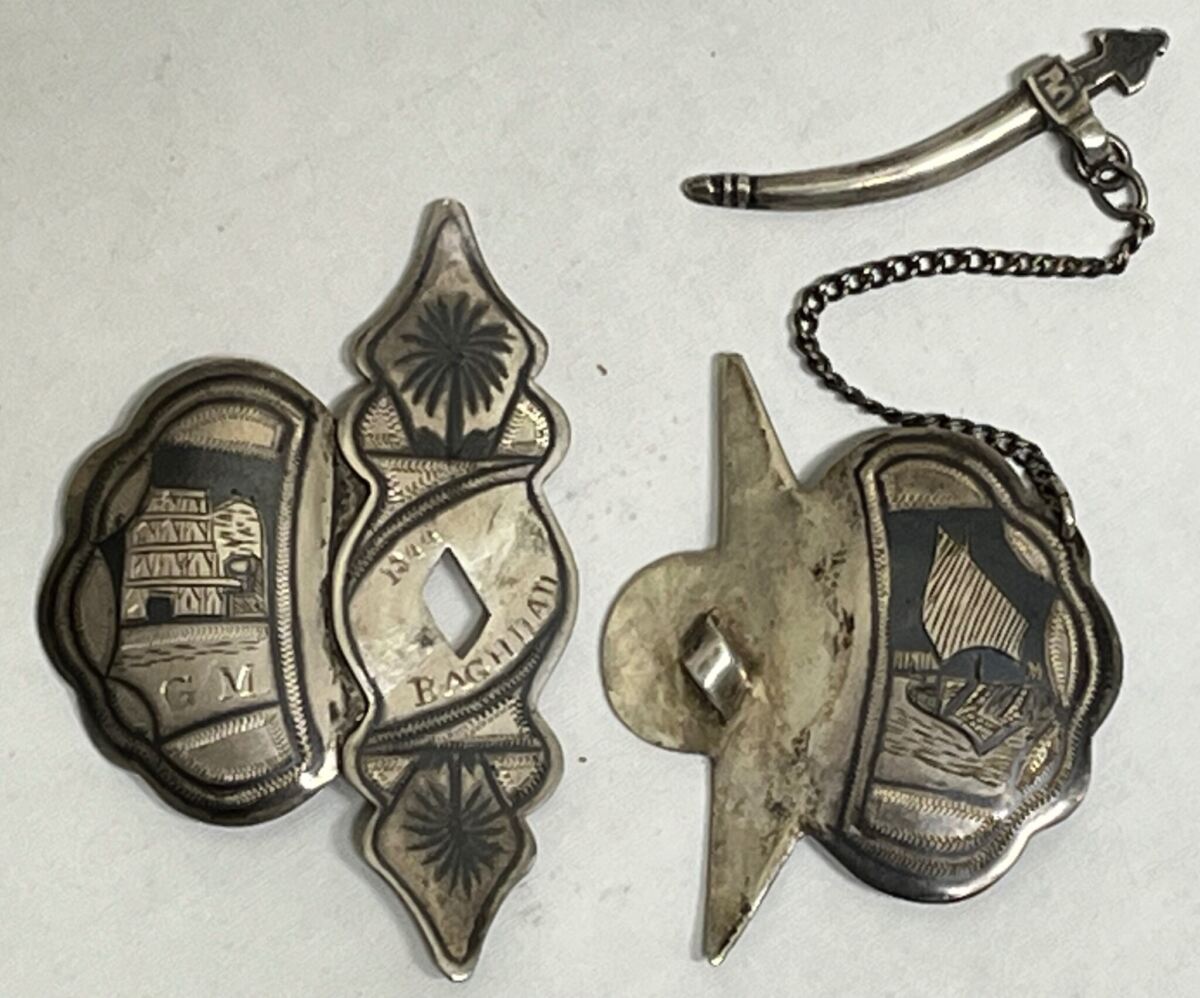
Niello silver 2-piece buckle. The sword through the center buckles the pieces together. Chased designs and inscriptions of 1944, BAGHDAD, G.M. Click to view this buckle.
"Slot fastenings are less common than other kinds - the majority are modern enamel from the Golden Triangle, but they are also found intermittently throughout Eastern Europe, including Russia and Slovenia." - Janne Perry